Aqniz Han Caravanserai

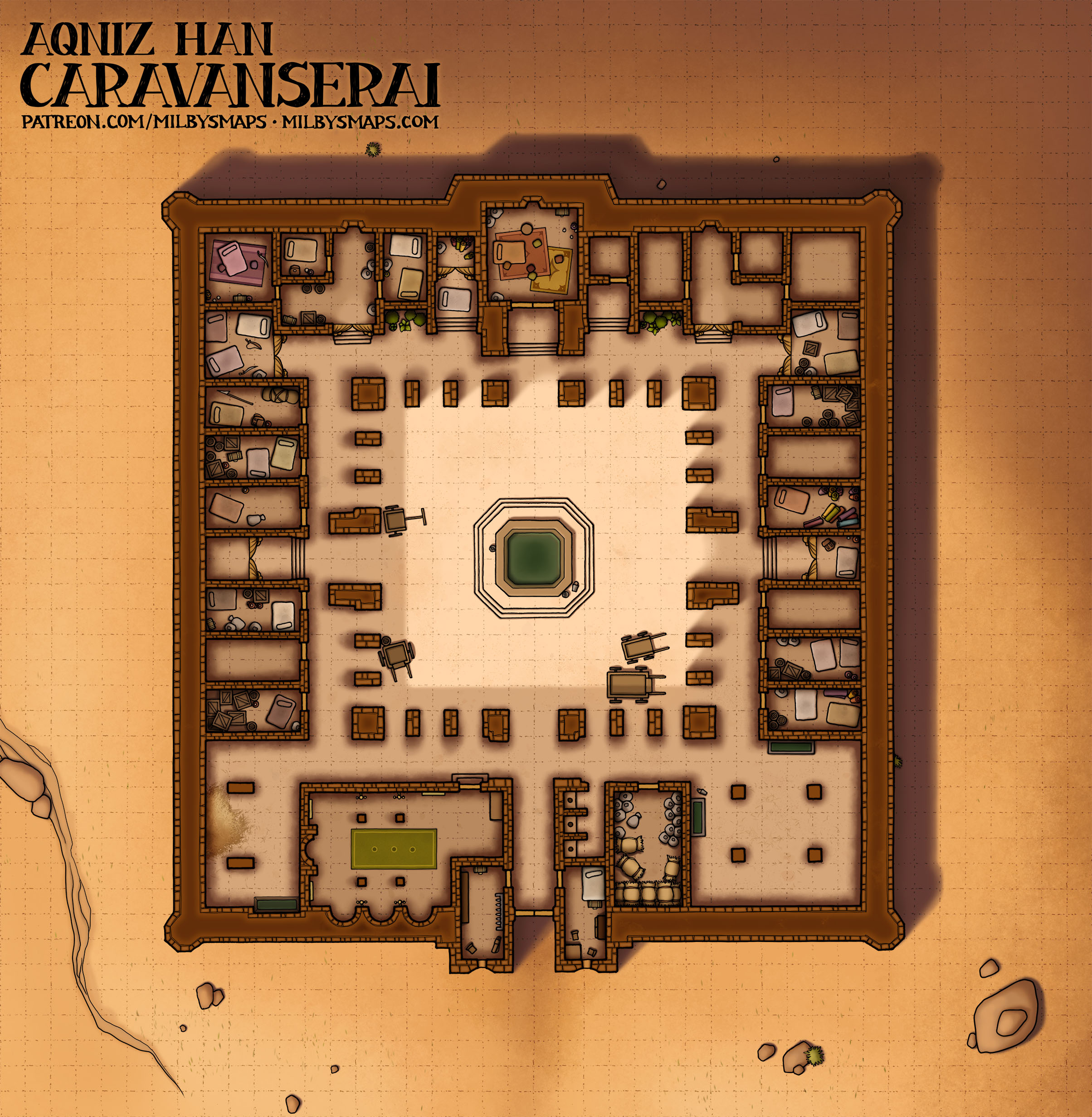
This isn’t the first caravanserai I’ve drawn, but I’d say it’s the first “normal” one. The other two are called “oasis” in their titles, but they’re pretty much caravanserais as well. This one is based largely on the Ribat-i Sharaf, a Seljuk caravanserai from the early 1100s. I’m not sure I have too much more to say about it, but if you’re a patron, there are some adventure ideas in the DM notes.

Next, I’ll be getting back to the Vatican megaproject. This time, I’m drawing the Palace of the Tribunal, which is the Vatican’s courthouse and the headquarters of the gendarmerie. The gendarmerie are, as far as I can tell, the Vatican’s boring, non-pike-wielding police, which they have in addition to the much more fun pike-wielding ones.

Unfortunately, this is the least famous place in the Vatican I’ve worked on so far. One of the nice things about drawing the Vatican is that almost every building is famous enough to have a wikipedia page and publically available floor plans. Unfortunately, the Palace of the Tribunal has neither, so I’m going to have to read what I can about it and make up a plausible interior for the place. For RPG purposes, I’d say it’ll be fine.

Anyway, that’s it for now. Hope you like the map!
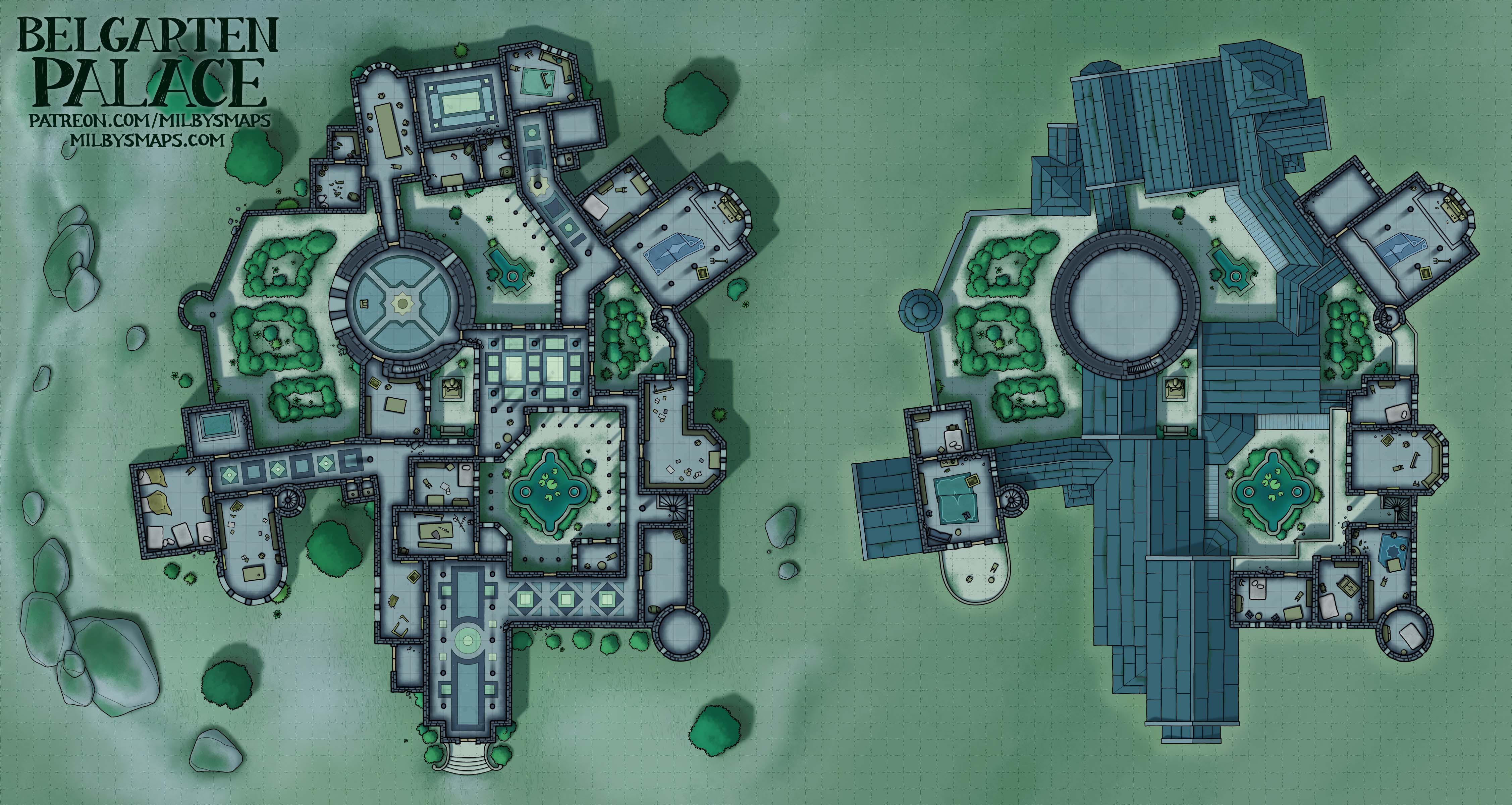
Belgarten Palace

I want to point out the secret door in the large, round room here. When I include a secret door in a map, I don’t actually draw the door (or an “S” where the door would be), because that makes it obvious to your players. And you can’t really hide it in a VTT. So I just draw a wall and leave it to you to decide which side the door is on. I thought I should mention that to avoid any confusion.

I intentionally made this place as convoluted and oddly-designed as possible, which makes it good as a sort of dungeon, I think. Maybe the party is looking for something or maybe they’re clearing out the monsters living here. Or maybe the place was sacked recently and they’re looking for survivors. In any case, there are a lot of potential paths through this place and a lot of different ways in (most of which involve climbing). I think it’d be a fun place to explore and there are some good spots for a battle– especially that courtyard with the big fountain and the walkway overhead.

Next, I’ll be drawing an orphanage with a secret hideout below it. Or possibly behind it. I’m not sure of the layout just yet, but the basic idea is that it’s an orphanage that serves as a cover for some really sketchy people. Maybe it’s a thieves’ guild, maybe it’s a cult of the god of disembowelment. I’ll leave it to you if and how the orphans might be involved. There’s a lot of potential for some highly traumatizing adventures. God, I’ve got some great ideas for this already.

All right, that’s it. I’m gonna get to work sketching out that orphanage. Let me know what you think of the map!


Circensis: The Underworks

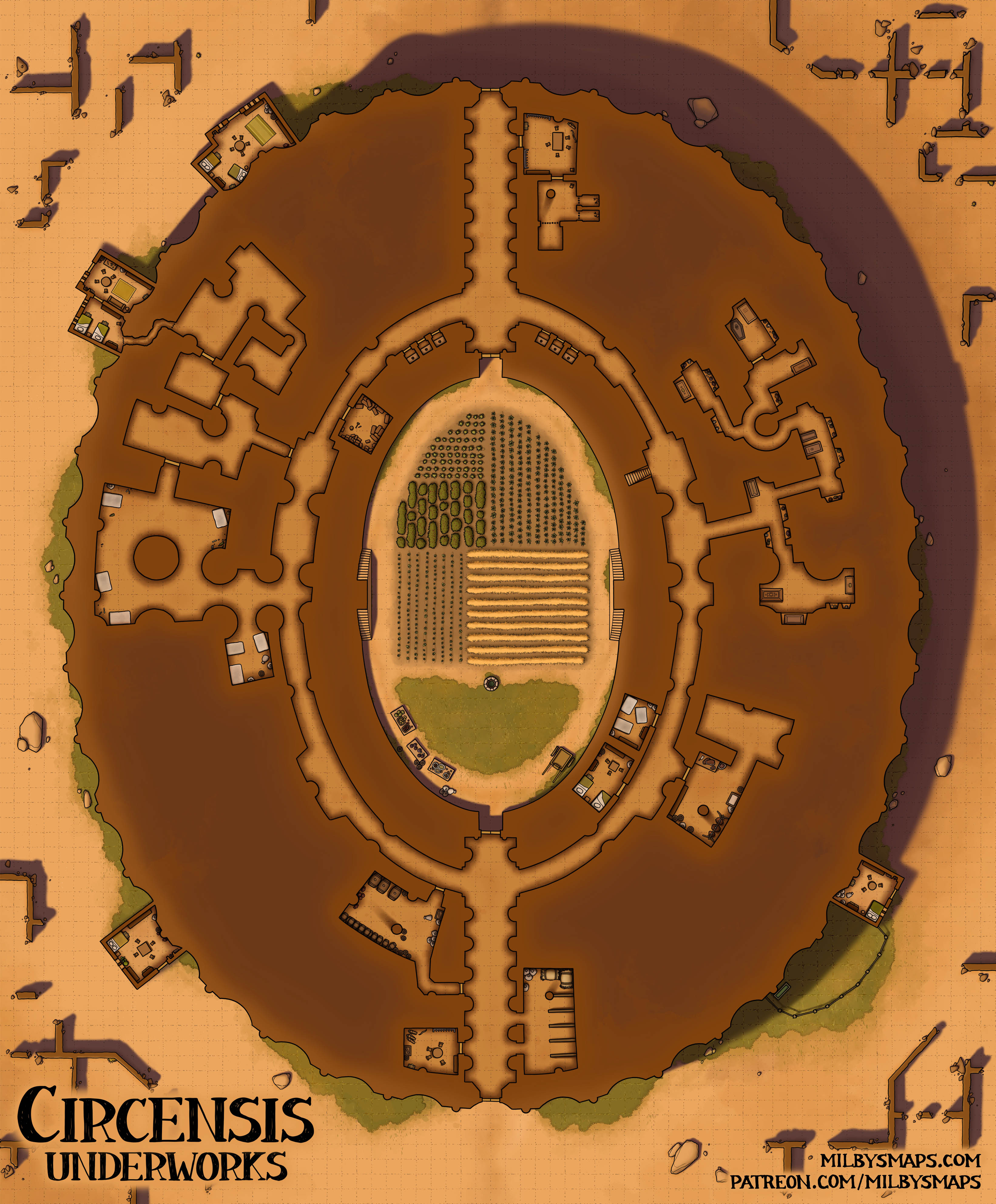
Here in the lower level of Circensis, there are some crypts, guard posts, a stable and a few other things. There are also a few disused chambers where the town’s poorest residents sleep.

I added a small tunnel leading into the underworks from the house in the upper left, which I thought might create some interesting possibilities. Maybe the party has to sneak into or out of the town and meets a group of smugglers who know about the passage. Or maybe a group of raiders finds out about it and sneaks in under cover of night. You may not have a use for it, but it’s there if you do.

With Circensis finished, I’ll be getting back to the Vatican. I’ll be drawing the Sacristy next, which is just south of St. Peter’s Basilica. This is where the passages at the bottom of the basilica map lead. Sacred relics were (and are) kept here, as well as the treasury. It also contains the workshops of the Fabbrica di San Pietro, the group of maintainers and restorers responsible for the upkeep of the basilica.

All right, that’s about it for now. Hope you like how Circensis turned out!

Circensis: A Town Built on the Ruins of an Ancient Amphitheater

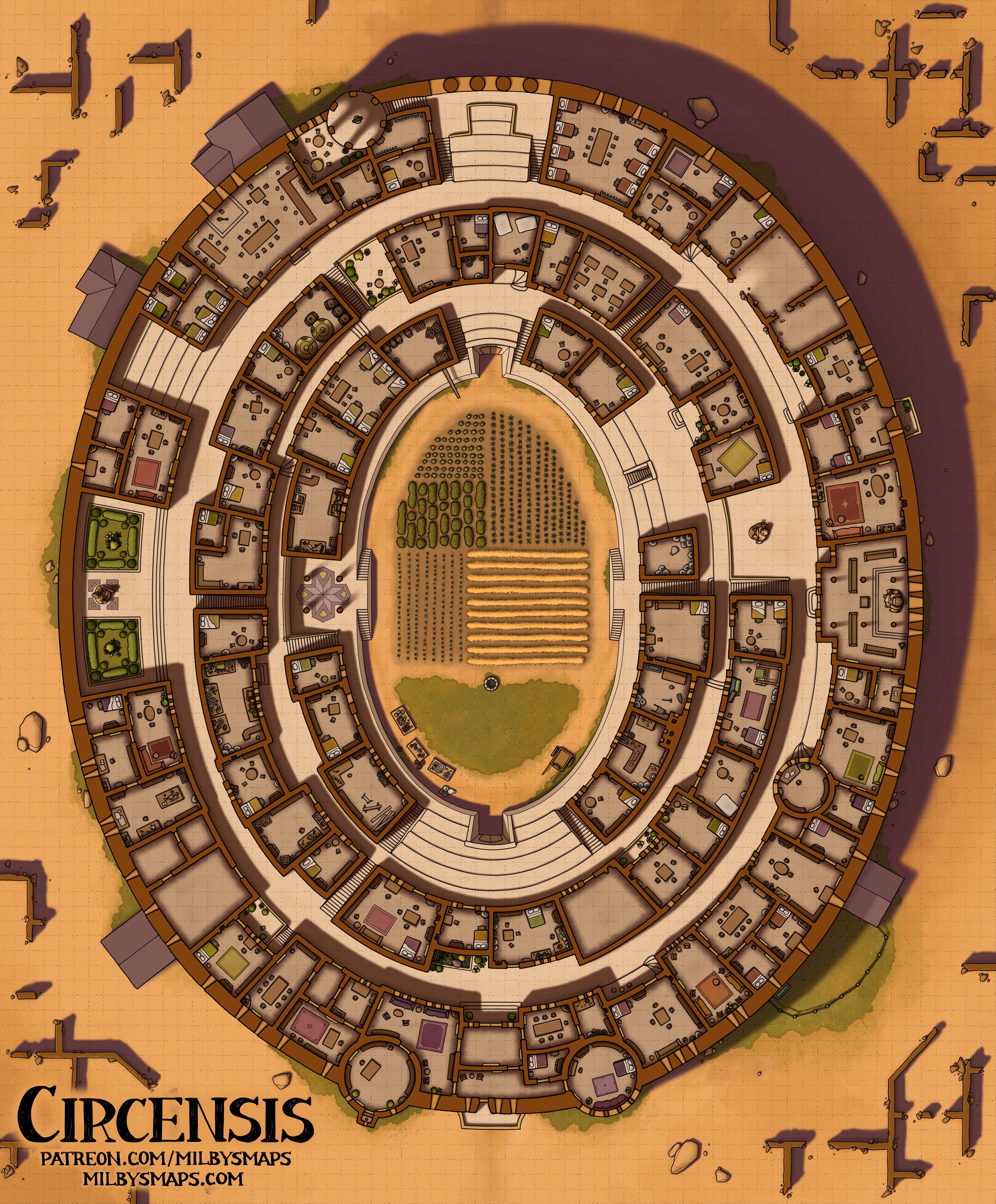
Well, this place turned out a bit bigger than I expected, but I think it was worth the effort. I’ll be drawing a map of the underworks next, which won’t be nearly as elaborate as this level, but will have some interesting stuff going on. It’ll also give this place an entrance.

As you can see, some of the amphitheater’s tiered seating still exists, making it clear what this place used to be, although most of it has been leveled off and built over. The walls of the ancient city that this was once a part of are scattered around nearby and were probably picked apart to build the town.

As I said, I’ll be drawing the lower level of Circensis next (and I’ll have DM notes for patrons with that). Then, it’s back to the Vatican. Anyway, this town-built-on-an-amphitheater seemed like a popular idea, so I wanted to ask how you think I did with it. Let me know what you think!

Rindlestone Hall

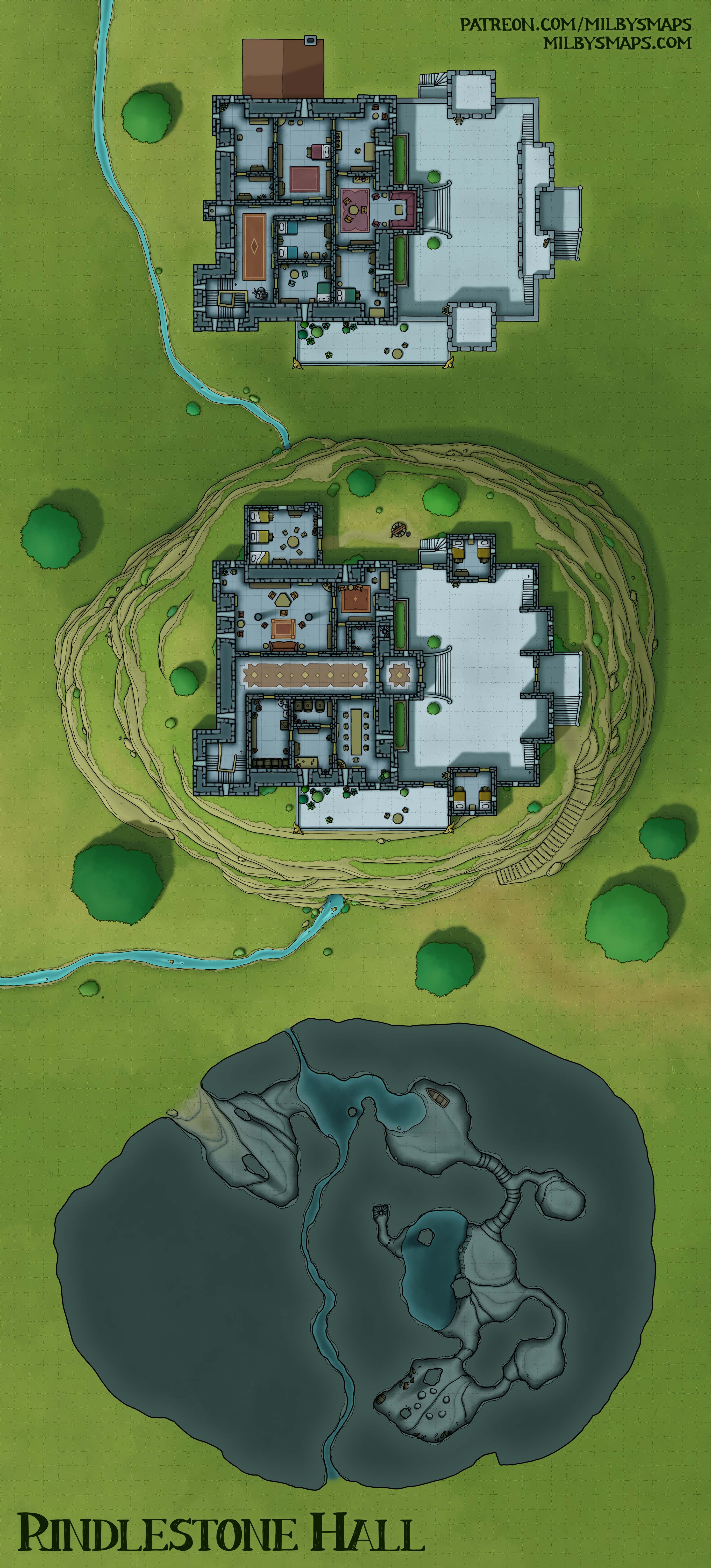
This map isn’t quite a real place, but it’s strongly inspired by one. Peveril Castle in Derbyshire, England is located over a cave called Peak Cavern, or “the Devil’s Arse.” According to legend, this cave “was where thieves’ cant was created by a meeting between Cock Lorel, leader of the rogues, and Giles Hather, the King of the Gypsies.”

Now, if you’re like me, you just heard a bunch of stuff you didn’t think existed outside of D&D. Thieves’ Cant is a real thing? And there’s a King of the Gypsies?! And– wait, rogues? What else are you hiding, England? Are paladins real, too? Can Anglican priests cast spells? Do your druids shapeshift? I WANT ANSWERS DAMMIT.

Okay, okay, I’m calm. Look, I just wasn’t expecting to learn that rogues and Gypsy Kings were inventing real-life Thieves’ Cant in a cave underneath a castle. I thought the most D&D thing in English maybe-history was Robin Hood and this kind of blows that away. Wow.

So, next up, I’ll be drawing the last part of St. Peter’s Basilica: the reliquary lodges. These are located inside the four main columns around the center of the basilica, so they’re pretty small and should only take a couple days to finish. I’ll say more about them when I’m done.

All right, I’m gonna get to it. See you soon!

Fort Irongall on the River Styx

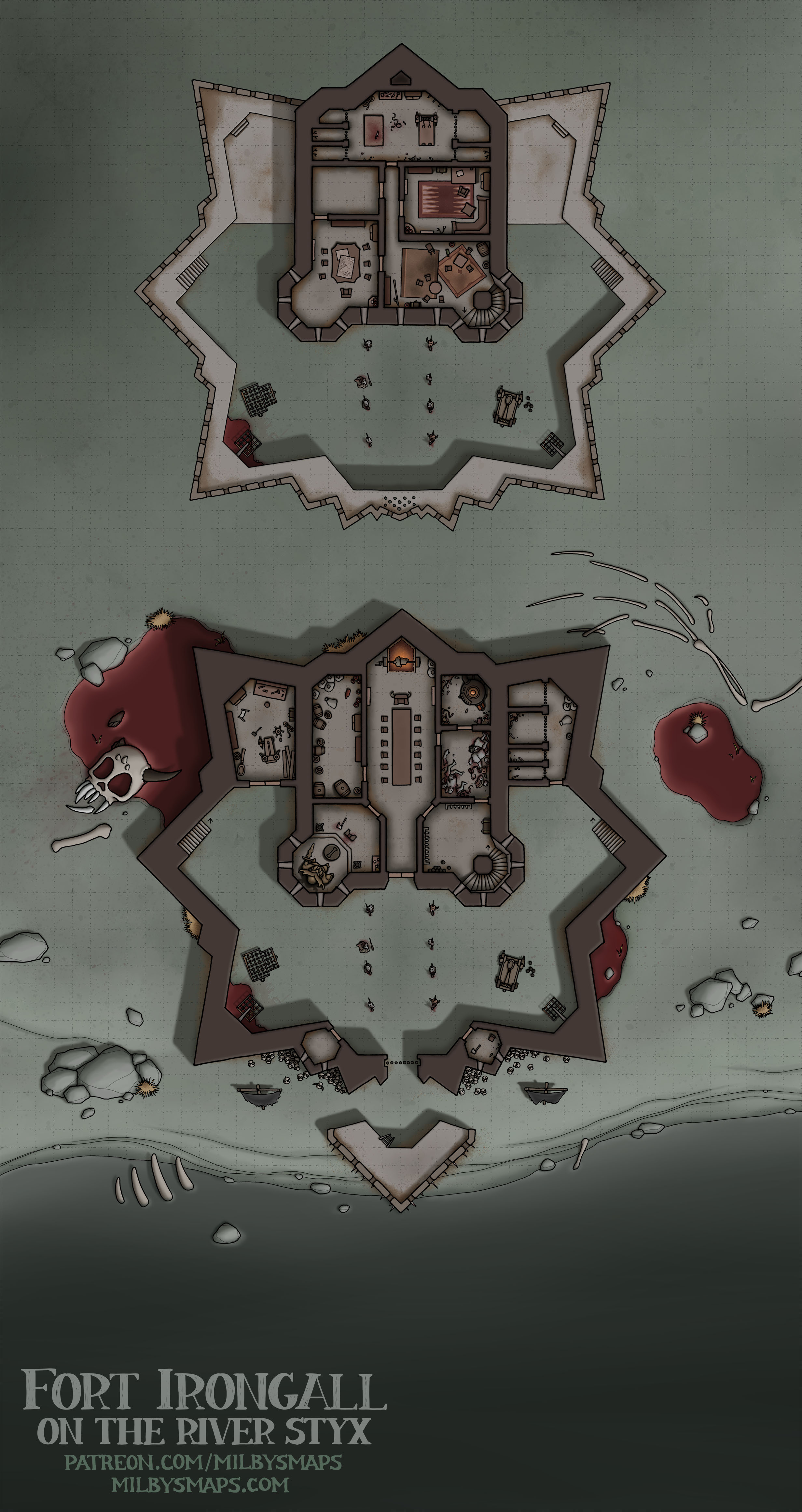
Hell. Hell never changes. Wait, that’s war. Does hell change? I’m not sure. In the traditional D&D cosmology, there are nine hells and they’re all different, so I think we can conclude that hell does, in fact, change. In a sense, anyway.

With that settled, I’m curious what you think about my depiction of hell. We’ve got the River Styx, some pools of blood (which I imagine is what it rains in hell), and a variety of skulls, corpses, heads on poles and so on. I wanted to draw something a little different from the standard-issue “pit of fire,” but I wasn’t trying to completely reinvent hell. Anyway, I hope it works for you.

With this done, we’re back to our regularly scheduled maps of Vatican City. I’ll be drawing the Roman Necropolis next, which is the second-to-last part of St. Peter’s Basilica. That’ll be three maps in a row with quite a lot of death in them. I hope you guys like death. Any death fans out there? Let’s hope so. Anyway, I’m gonna go look up some floor plans for that and get to it. See you soon!

Saintsblade Abbey

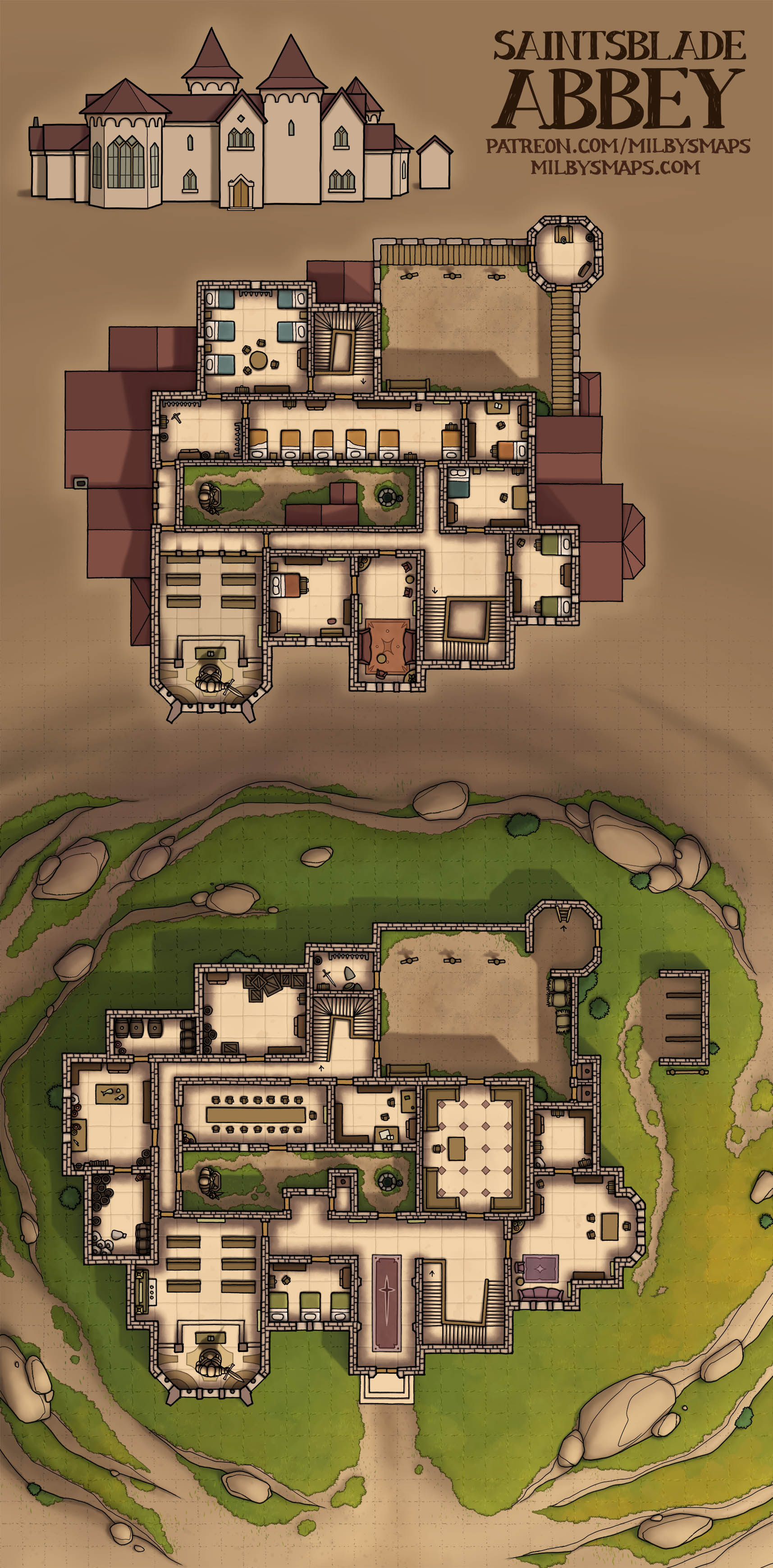
Saintsblade Abbey is the home of an order of paladins, devout followers of the God of Doing the Right Thing. Here, these holy warriors train rigorously in the ways of battle. Because, on occasion, Doing the Right Thing involves caving people’s skulls in with a hammer.

I think this map could be good for an adventure where the party’s paladin returns home to deal with some catastrophe that befell his order. Maybe there’s heresy in the ranks, or a conflict with a rival church, or a schism that threatens to tear the order apart. Or maybe they put that idiot Thaddeus in charge (god, can you imagine). Plenty of possibilities.

I still need to catch up on the Cartographic Congress before I get back to the Vatican, so next I’ll be drawing a floating, arcane city, similar to the Netherese Enclaves of the Forgotten Realms. This will be a city map rather than a battlemap, so it won’t be as big a project as it sounds, but I think it’s a cool concept and I’ve been looking forward to it. After that, it’s back to the Vatican.

Well, that’s it for now. Let me know what you think!

Cladwater Lift Lock: The Ramparts

Here’s the upper level of Cladwater Lift Lock, as promised. And for patrons, I made a night version as well.

With that done, I’ll be getting back to the Vatican City megaproject, where I’ll be drawing St. Peter’s Basilica. Because the place is gargantuan and the floor is extremely elaborate, I’m not sure how long it’ll take, but I’ll post some work-in-progress pics along the way to show you how it’s going.

The basilica is an incredible work of art and I’m going to try to capture as much of that as I can in the map. But, ultimately, there’s only so much I can do. I’m going to show you two photos. Okay? This is Notre Dame in Paris. A world-famous masterpiece of architecture, no question. And this is St. Peter’s Basilica. I mean, like… that’s just bananas. My point is that I’ll do what I can, but I can only do so much in the face of that.

All right, I’m going in. Wish me luck.

Cladwater Lift Lock

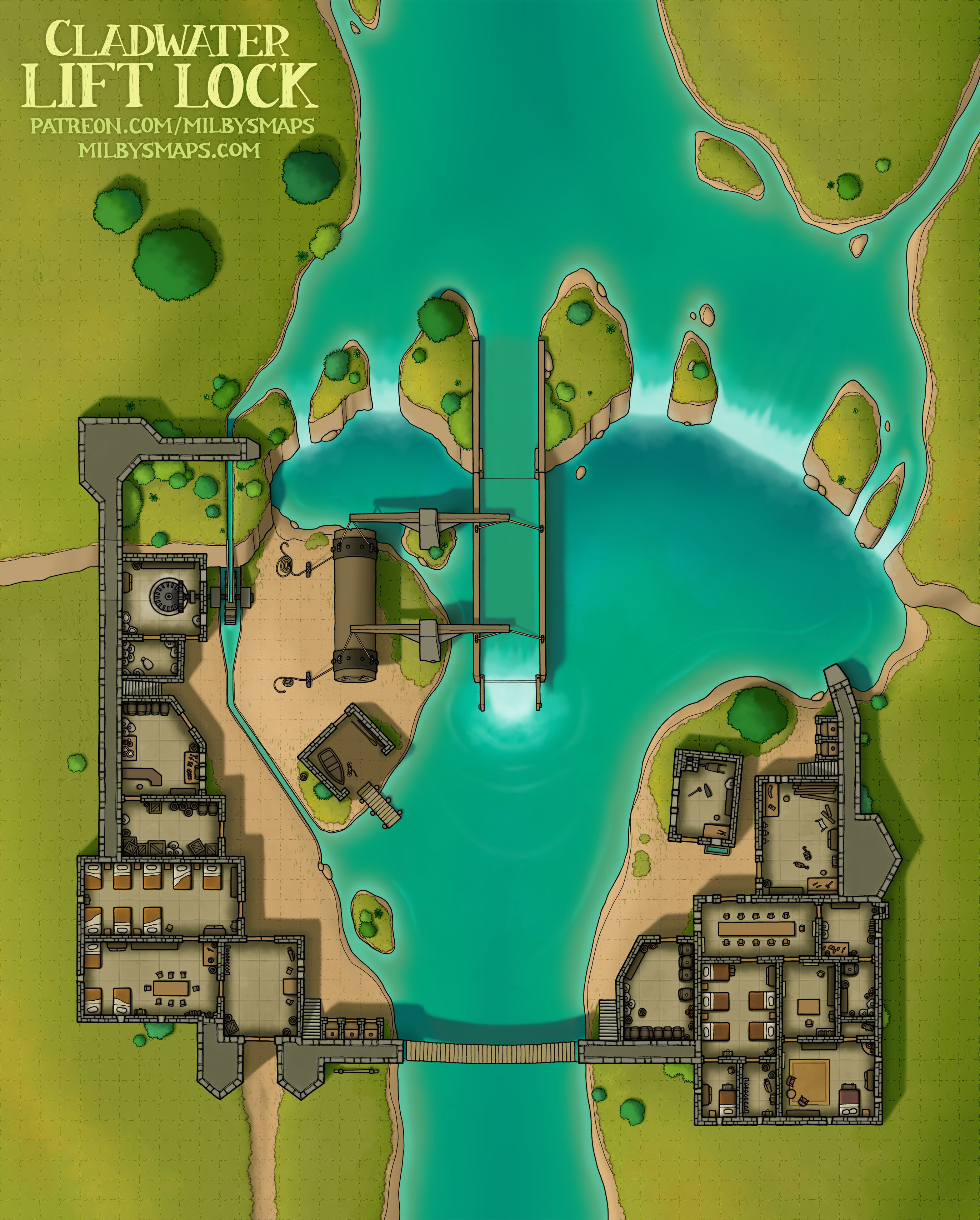
So the idea for this map is that it’s an outpost with a lock that lets riverboats cross a waterfall. If you’ve never seen one, boat elevators are a real thing. Here’s a Canadian one. And here’s Scotland’s super deluxe fancy one. I’m not sure if there are any that go over waterfalls, but it seems possible.

These things don’t go too far back in history, but Germany had one in 1789, so you should be able to get away with it in a fantasy setting. If you need an excuse, the phrase “dwarven engineering” has been letting DMs get away with putting sci-fi stuff in the middle ages for years. There’s a little pro tip for you.

As you may have noticed, this place does have stairs and there is an upper level to draw. It’s nothing fancy, just some ramparts, but I’ll draw that next. It should only take a day, two at most. After that, we’re back to Vatican City, where I’ll be getting started on St. Peter’s Basilica and its perfectly reasonable floor.

All right, I’ll be back with that soon! If you’ve got any questions or thoughts about the map, let me know.

Hackett’s Pass Blockhouse

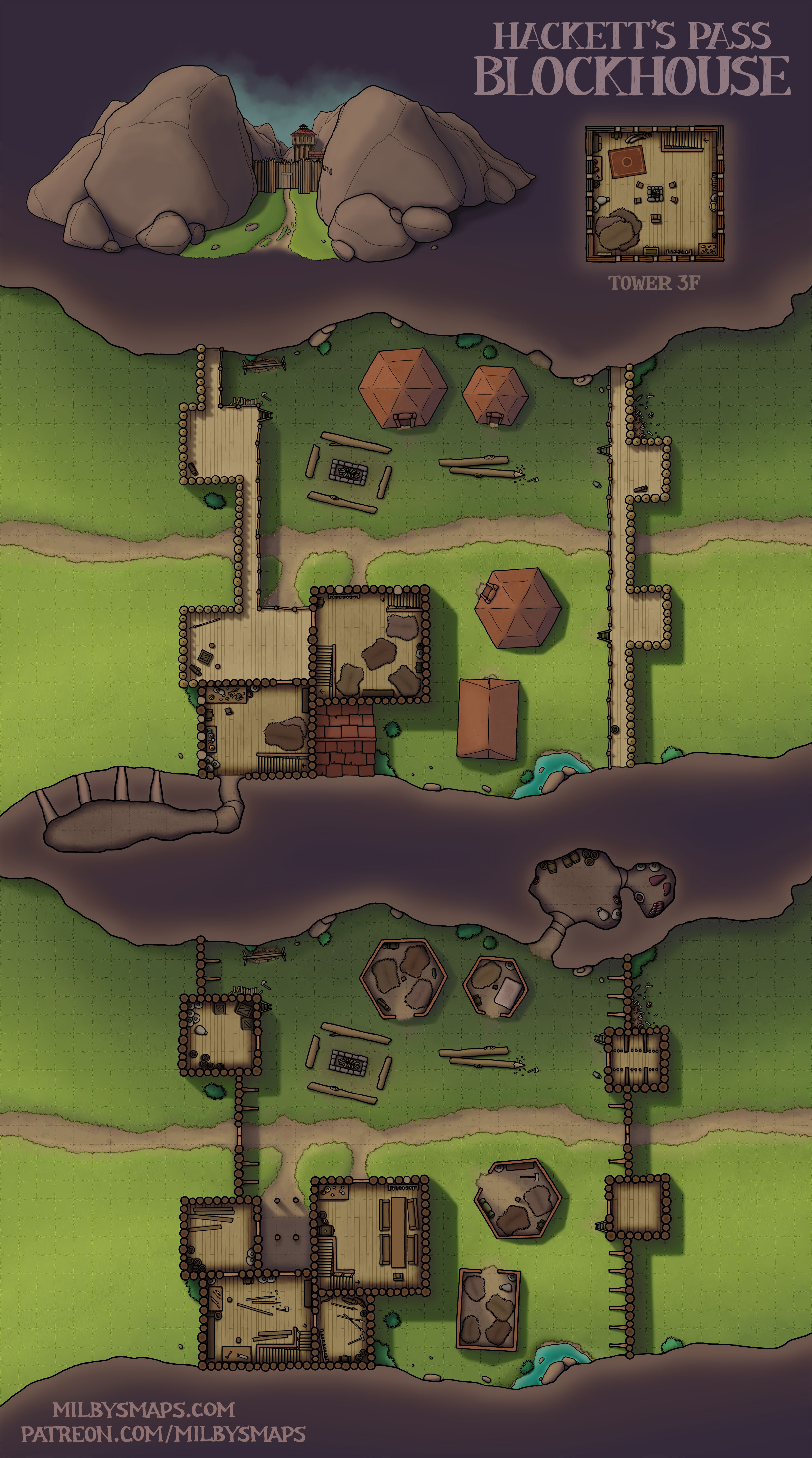
This map is a good place for an on-the-road encounter. It probably starts with the party traveling through the mountains and finding themselves in front of the gates here. Then, somebody tells them they need to pay a toll if they want to pass.

Now, in real life, people would see two options in this scenario: pay the toll or turn around and leave. But in D&D, nobody ever even considers the second option. The choices are to pay the toll or to kill every single one of these punks. And, unless the toll is very reasonable, I’d usually bet on option 2. Killing a few dozen people in order to avoid forking over a hundred bucks is just another day at the office in the Forgotten Realms. In any case, it’s a fun encounter to throw at your players in the middle of a long journey. And once in a while they do surprise you.

Next, I’ll be drawing a map of a multi-level waterfall city in the jungle that extends from the top of the falls, across multiple cliff outcrops and down to the bottom. This will be a city map (like this, for example), not a battlemap like Vayl’s Firth. I’m way outside my comfort zone with this– which I like– but it makes me a bit nervous going into it. So let me grab a pencil and see if I can figure out how to draw this place.

Well, that’s about it for now. If you’ve got any thoughts or questions, by all means let me know!