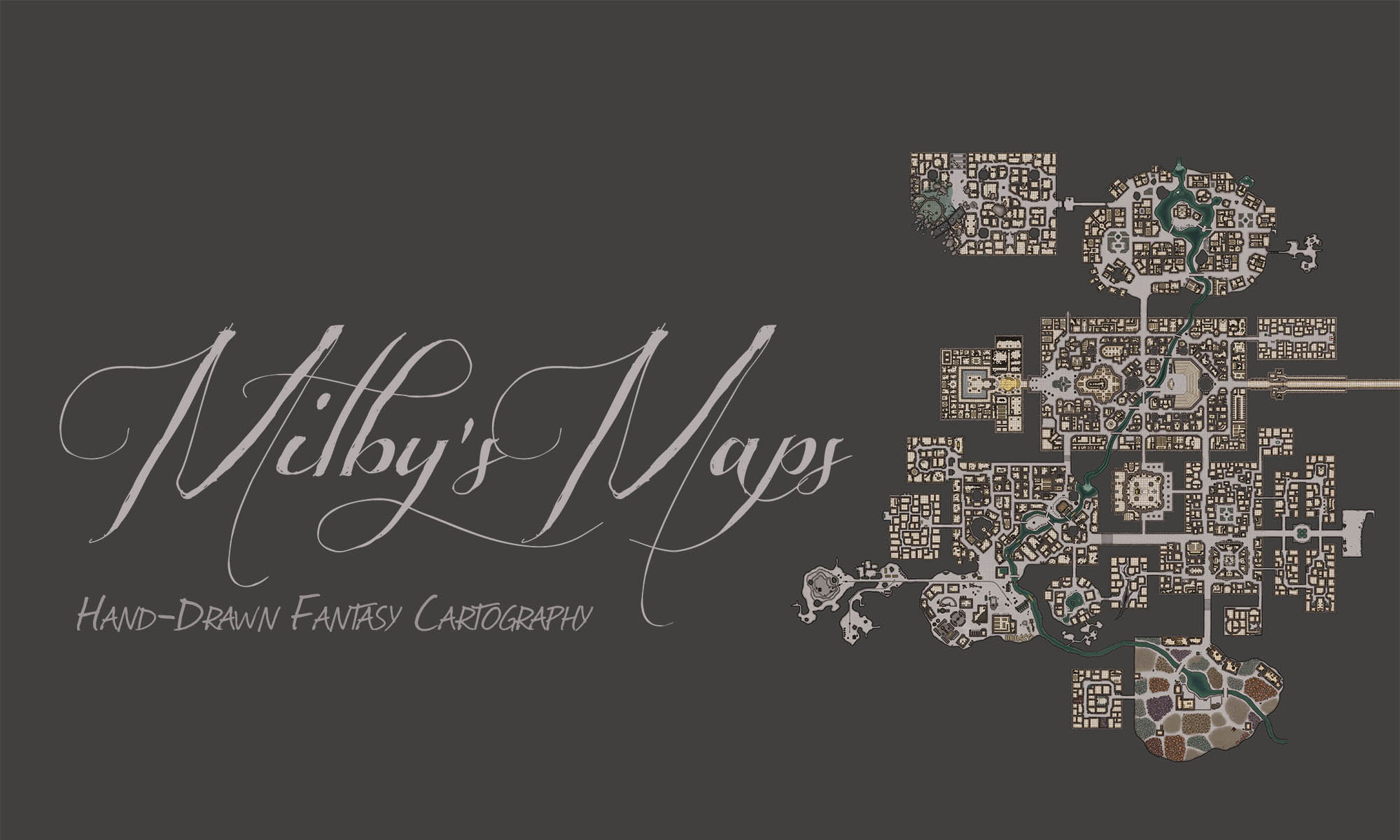

Also, here’s the entire first level of the town and the abbey. I think this is pretty awesome. Thank you so much for letting me make stuff like this.
Also, here’s the entire first level of the town and the abbey. I think this is pretty awesome. Thank you so much for letting me make stuff like this.

The second level of the town is coming along faster than I’d expected and I’m feeling like we’re on the homestretch now.
If you noticed that building at the bottom extending over the street, you should have a look at the real thing. You know what that place is called? The Inn of the Unicorn. No kidding. How is this place real? Everything about it is straight out of a fantasy novel. There’s a place called the Inn of the Mermaid down the street, too. And both of those date back hundreds of years.
God I love it.

And that’s it for the abbey. You may have noticed the steeple here and thought, “Is there really a statue of a sword-wielding angel on top of this thing?” In fact, there is a GOLDEN statue of a sword-wielding angel on top of it. I mean, sure, you can hardly see it from the ground, but people know it’s there and that’s the important thing.
All right, back to work.

The third and final floor of the abbey is finished. In the center is the cathedral, of course. Above it on the left is the cloister, with the refectory and kitchen on the right. For those of you not familiar with the term, a refectory is a dining room in an abbey. It strikes me as one of the least-necessary words in the English language, but there you go.
The area on the left side of the map is a huge, open-air terrace. The area outlined inside it is the foundation of a structure that was meant to be built there, but never was. Elsewhere on this level are an infirmary, a disused dormitory, a used dormitory and a small archives.
Now I just need to slap a roof on this baby and then I’ll be finishing up the town. My original plan for that was to draw three full floors of the town as they are in real life. There are a few buildings with fourth floors, but in the interest of keeping the map to a manageable size, I decided to just lop those off.
That’s still the plan, but I’m also going to partially abridge the third level. I can’t claim that I’m doing it to keep this thing from being too ludicrously huge because, well, I think we passed that point a long way back. Mainly I just don’t think drawing the third floor of every building adds that much to the map. A lot of what’s up there isn’t that interesting and, if this weren’t a map of a real place, I’d feel like a lot of the town’s 3rd level was filler. So I’ll pick and choose which buildings get a third floor and which ones don’t and hopefully it won’t be any less useful or interesting to anyone.

The second level of the abbey is done and there’s some interesting stuff here. The room near the bottom-left with the four pillars is an ossuary. The big thing in the middle is called a “treadwheel” and it’s meant for hauling stuff up a ramp into the abbey. It’s turned by people walking inside it like big, hairless hamsters. Yeah, I know. Fun.
The big chamber near the center that looks like a hand giving the middle finger is the “Crypt of the Great Pillars.” The two small rooms with no doors above and below it are cisterns. This place actually has four. Religion is thirsty work.
The room the middle finger is pointing to is an ecclesiastical court. Then above that, past the gardens, is the Hall of Guests (“Salle des Hôtes”), a big chamber meant for hosting nobility and other distinguished guests. The other big chamber on the left is the scriptorium, where the monks worked to copy books.
I was thinking about drawing these last two rooms furnished, but I decided against it. My reasoning for it was that this map is for D&D purposes and, as a DM, if I’m having some kind of big encounter or battle, that’s probably where it’s going down. And because of that, I felt like I should leave the rooms flexible. No one wants to be tripping over a bunch of desks while they’re trying to stop the High Priest of Whatever from summoning the lord of darkness.
I’ll be back with the third and final floor of the abbey. Unfortunately, the winding-underground-tunnels portion of the adventure is over, but there’s still some interesting stuff left to explore.

The abbey of Mont-Saint-Michel is both amazing and complete madness. Every map I have of it (and I have a lot) disagrees with the rest about what rooms are on what floor.
The thing is, the floors here don’t just neatly stack on top of each other like most buildings. Imagine a house with five basements. Each one has a staircase leading down to it and each one goes to a different depth. One goes 10 feet down, another 15, another 20. Now imagine that the one that goes 15 feet down has two more staircases: one that goes up to the 10 foot basement and another that goes down to some other room 5 feet lower. Now imagine that, because this house is built on a steep rock, some of these basements lead outside. That’s what the abbey of Mont-Saint-Michel is like.
There’s some pretty interesting stuff down there, though. In the lower-left corner is a collapsed building that used to be a hotel. And just north of that, past the toilets, are the dungeons. Yes, this abbey has dungeons. God and the church maintain differing policies on the issue of forgiveness.
To the right of the dungeons is one of the oldest parts of the abbey, a church known as Our Lady of the Underground. You’ve also got the Crypts of Aquitaine, a disused cistern, a chapel undercroft and an old kitchen which may actually be a toilet (sources disagree).
I’m going to do the rest of the abbey next. I’ve finally managed to wrap my head around what goes where in this place and I don’t want to forget and have to figure it out again. I’ll be back with the second level, which has a bunch more underground tunnels, an ossuary, crypts and assorted other dead people storage facilities.

Originally, I’d intended to post again once I’d finished the upper town, but I decided to push on and finish up the gardens as well. So this is the entire ground level of the town complete. Aside from two small buildings on the north side of the island, the only thing left is the abbey. It’s hard to say for certain, but I think this was the hard part. I really hope this was the hard part. This part was super hard.
One other thing I need to talk about is how long this will take and how I’m going to handle it. I estimated a month at the start, but it’s going to take another month at least. I could pause and work on a Cartographic Congress map or Brazenthrone, but I really don’t want to do that. I am very much in the zone right now, I’m getting a lot done and as long as the boiler is burning hot, I want to keep steaming ahead.
So, this is the plan: I’m going to push through and finish Mont-Saint-Michel. Afterwards, I’m going to knock out whatever Cartographic Congress maps are waiting to be drawn. Then, I’ll draw an equal number of Brazenthrone maps in a row, plus one.
I really hope everyone’s cool with me putting everything else on hold for this. I didn’t realize how much work Mont-Saint-Michel would be, but hopefully you’re liking it so far.

I feel like things are starting to get kind of real now. This is most of the town finished, including the local church (Saint-Pierre’s) at the top with the cemetery below it. There’s also a gambling hall, some gardens, a bunch of houses and, at the top left, a building known as the House of the Spinning Pig (“Truie-qui-File”).
The story behind this is that, apparently, some guy taught his pig to spin thread and he used to take it out in the streets where people would watch it perform. Eventually some religious authorities caught wind of it and told everyone what a delightful miracle this pig was. The man and his pig became famous and lived happily ever after.
I’m kidding, of course. They accused the guy of having demonic powers and lit him on fire. The pig, too. The middle ages weren’t a great time to be different.
Anyway, just thought I’d share that. I’ll be back in a few days with the rest of the town and the gardens.

I hope you all had good holidays! The Mont has grown a good bit lately. There’s more of the town and the walls finished to the east of the gates, along with the Tour de la Liberté (“Tower of Freedom”).
And below, there’s the barracks with its own barbican and the Tour des Fanils (This sort of means “Stephanie’s Tower.” I think. It’s complicated). In the northwest corner is the Tour Gabriel (“Gabriel’s Tower”), a huge artillery tower with a windmill and a lookout tower built on top of it. Yeah, I’m thinking it too. I heard you like towers.

One other thing I wanted to mention: the arrows at the top or bottom of staircases indicate which direction is up. Maybe that’s obvious, but I just wanted to make sure.
Okay, that’s it for now. I’m gonna draw more of the town next. I’ll be back to show you when I’ve got a few more pages done.

Here’s a couple of pages I (mostly) finished inking to give you an idea of what this thing was going to look like. These are the outer gates and barbican.
The outermost entrance, the “Porte de l’Avancée,” is on the far left by the guardhouse. To its right is the “Porte du Boulevard.” And finally, for those especially persistent assailants, there’s the “Porte du Roi,” or the “King’s Gate.” This is protected by a ten-foot ditch crossed by two drawbridges– one for the main gate and one for the postern beside it– plus a portcullis and two sets of steel doors.
Here’s what the inside of the gatehouse looks like. The big thing on the ceiling is the back end of the drawbridge arms with a big counterweight in the middle. Pulling that down brings up both drawbridges. The release for the portcullis is in the room above. Dropping a big, sharp hunk on steel on someone’s head is a classic French move.
If you’ve looked at any maps of Mont-Saint-Michel, you might notice that there are some buildings missing from inside the barbican (the triangular wall). Those are fairly new and I’m removing them. This is going to be a little bit of a mish-mash of the Mont at different points in history. I’m including two postern gates in the east curtain wall which were bricked up a few centuries back. I’m also drawing in the “Grand Degré,” an inner gatehouse between the town and the abbey. It was dismantled, but I have diagrams of it from an old French book and it’s pretty cool, so I’m putting it in the map. I’m also including a windmill that used to be on the westernmost tower and a few other things. There isn’t enough information for me to roll everything back to the middle ages, but I’ll do what I can.