The Vatican Necropolis

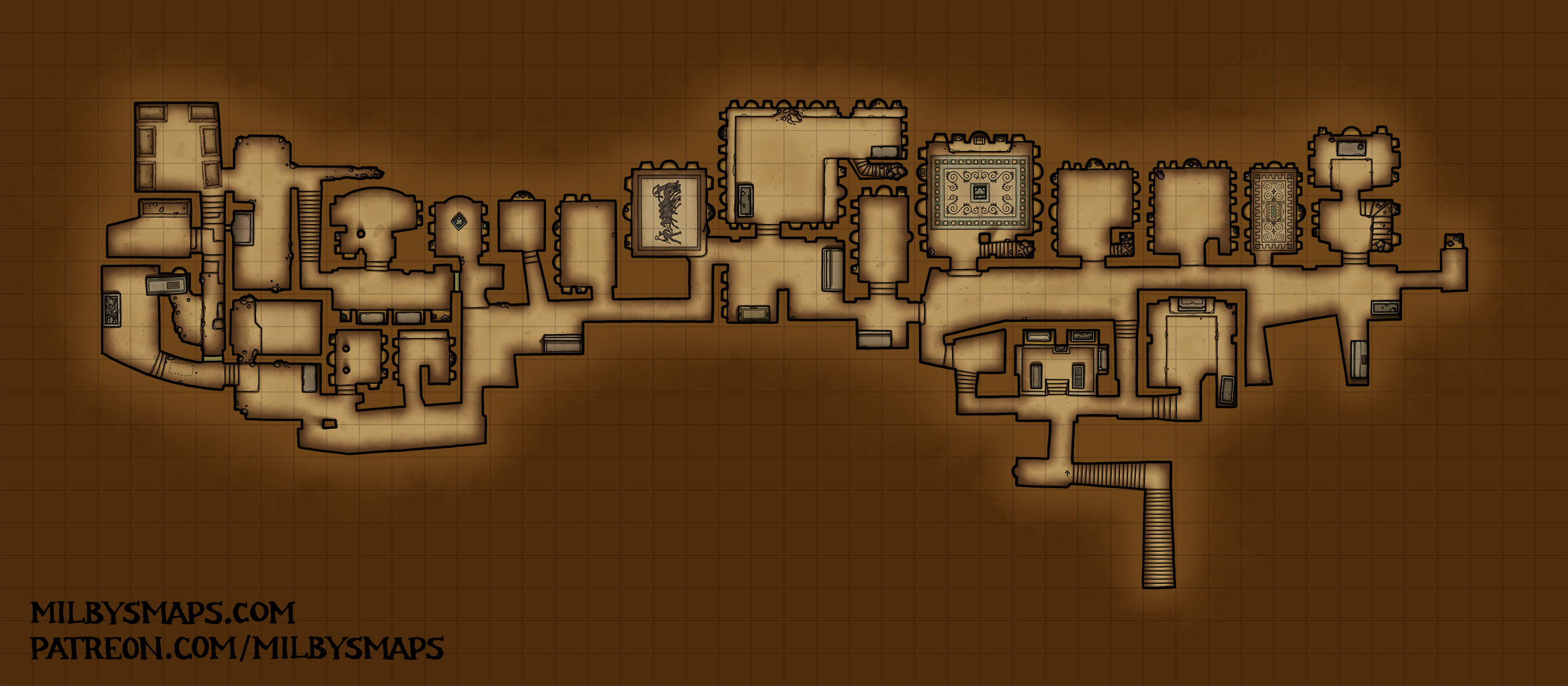
There’s an insane story about the Vatican Necropolis that I read while doing research for this map and I’d like to share it with you.

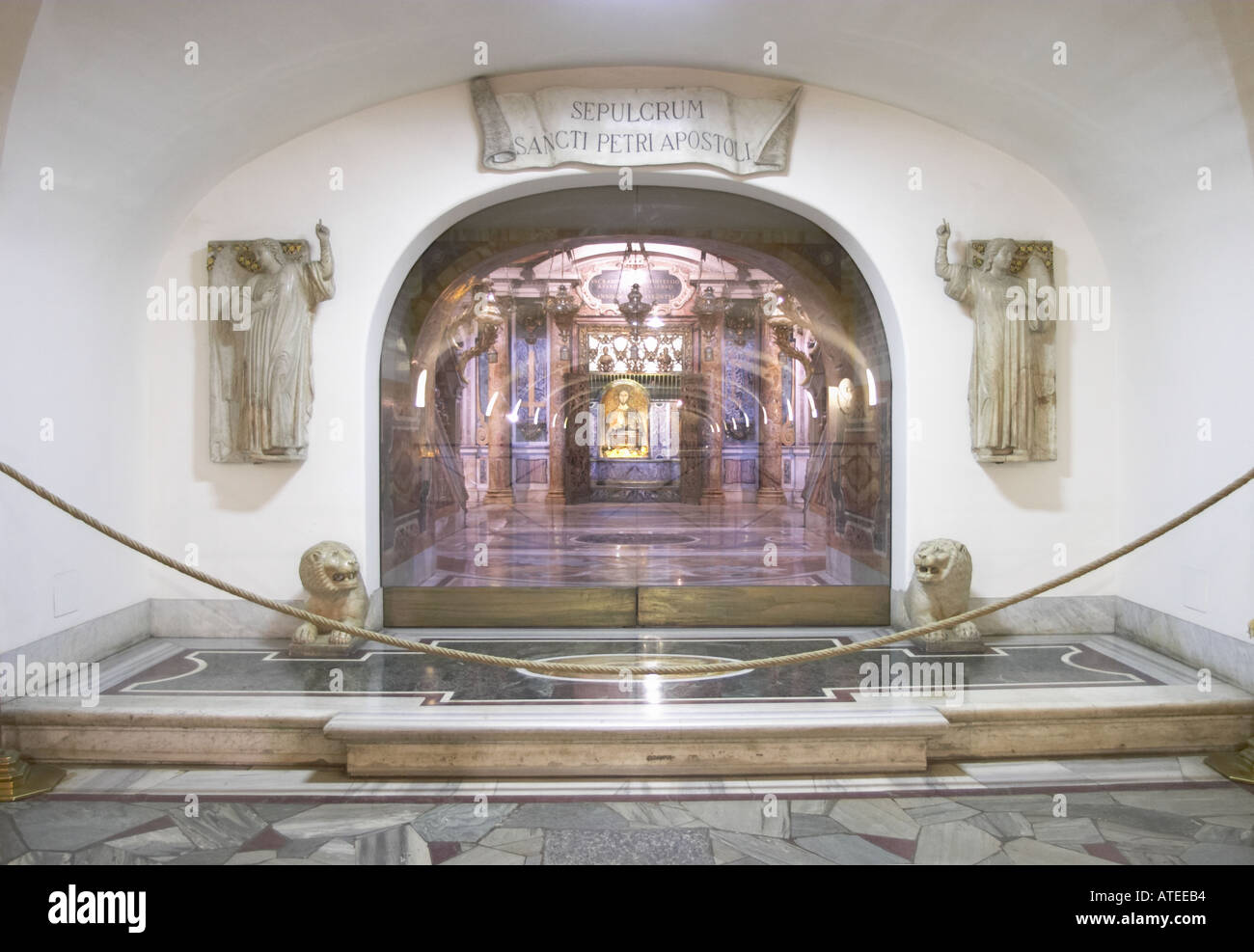
So, St. Peter’s Basilica was said to have been built directly over the grave of St. Peter, the first pope. His grave was well below the basilica, however, and was not accessible.

Then, in the 1940s, Pope Pius XII decided he wanted to open the Vatican Grottoes to tourists. There was a problem, though: the ceilings were too low. They couldn’t be raised because there was a basilica on top of them, so the floor had to be lowered. Workers were sent in to dig every room two feet deeper and put in new floors. And, in the middle of this, one of them broke through to something below.

The ancient, Roman tombs they found were considered likely to contain the tomb of St. Peter, so the pope sent a group of archaeologists to get in there and archaeologize the place. A priest named Ludwig Kaas, who had no education or experience in archaeology, was assigned to oversee the excavation.

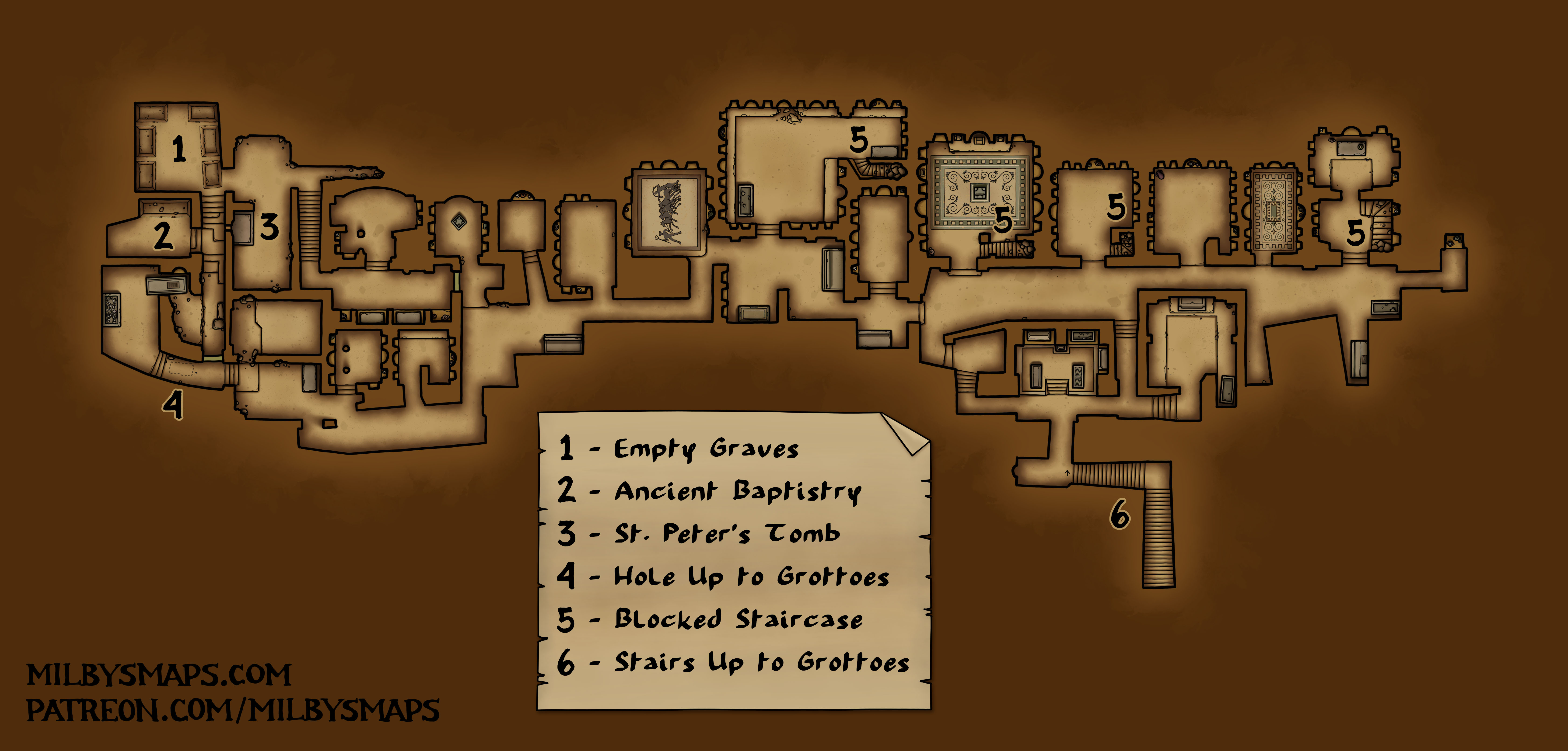
Eventually, an archaeologist named Dr. Margherita Guarducci found St. Peter’s tomb. It was directly under the central altar of the basilica, it was lined with marble and there was graffiti that said it was him. Bingo. The only problem was that there were no bones inside. Dr. Guarducci wondered why they were moved and where they might be now. They started testing bones from the necropolis. Is this St. Peter? No, that’s a woman. How about this? No, that’s a teenager. This? That’s a sheep.

Ten years later, while talking to one of the basilica’s maintenance guys, Dr. Guarducci found out where the bones went. Apparently, Father Kaas had been going into the dig site at night, taking out any bones he found and putting them in boxes. Without telling anyone. They’d been in a storeroom for a decade and Father Kaas never said anything. For ten years, he watched people search the necropolis, test remains and painstakingly examine the site for clues about where St. Peter’s bones might be. And this dude said absolutely nothing. And then he died.

And that’s how the bones of St. Peter were discovered by archaeologists. In a box in a closet.

Next, I’ll be drawing a castle sitting over an elaborate cave system, containing a meeting place for the local thieves’ guild. It should be a useful map for adventures where the players are going somewhere that’s normal on the outside, but shady on the inside. Secret gangs, cults, conspiracies and so on. Have you seen Hot Fuzz? That sort of thing.

After that, I’ll be drawing the last part of St. Peter’s Basilica, which is the reliquary lodges. They’re small and won’t take more than a couple days.

All right, that’s about it. Let me know what you think!
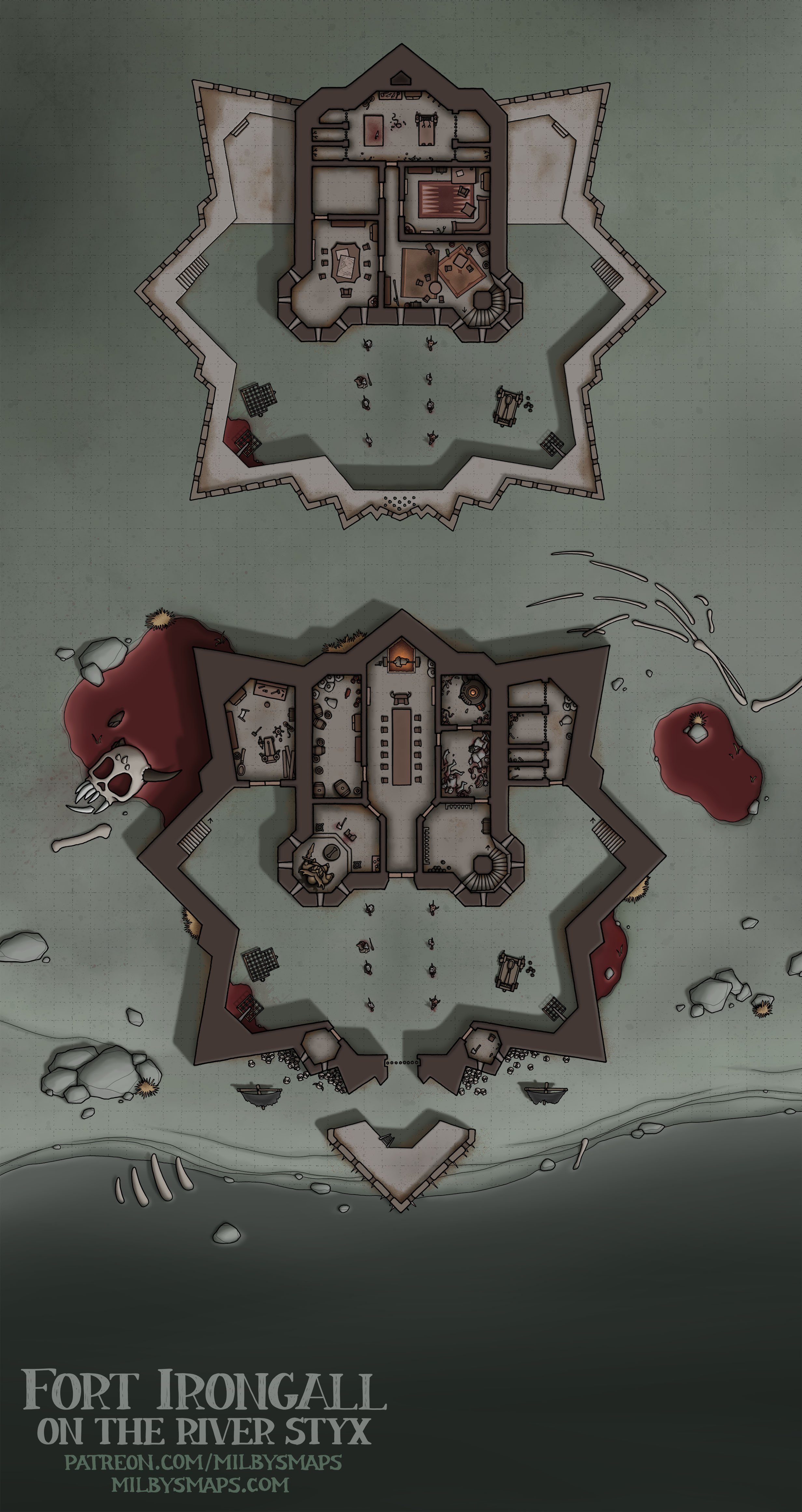
Fort Irongall on the River Styx

Hell. Hell never changes. Wait, that’s war. Does hell change? I’m not sure. In the traditional D&D cosmology, there are nine hells and they’re all different, so I think we can conclude that hell does, in fact, change. In a sense, anyway.

With that settled, I’m curious what you think about my depiction of hell. We’ve got the River Styx, some pools of blood (which I imagine is what it rains in hell), and a variety of skulls, corpses, heads on poles and so on. I wanted to draw something a little different from the standard-issue “pit of fire,” but I wasn’t trying to completely reinvent hell. Anyway, I hope it works for you.

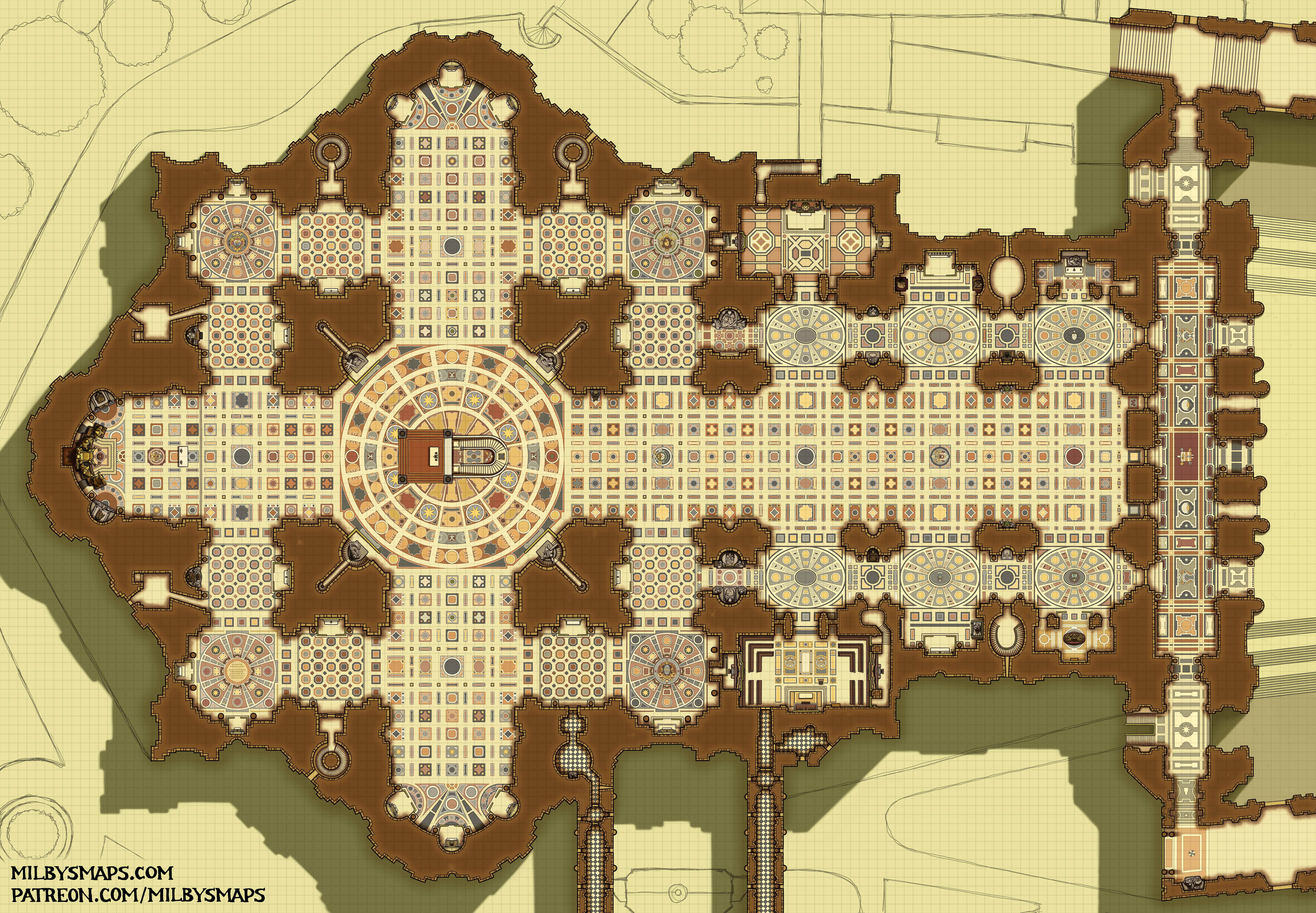
With this done, we’re back to our regularly scheduled maps of Vatican City. I’ll be drawing the Roman Necropolis next, which is the second-to-last part of St. Peter’s Basilica. That’ll be three maps in a row with quite a lot of death in them. I hope you guys like death. Any death fans out there? Let’s hope so. Anyway, I’m gonna go look up some floor plans for that and get to it. See you soon!

The Vatican Grottoes

For me, the Vatican Grottoes are one of the most interesting parts of Vatican City. From St. Peter’s Basilica, you can enter through the stairs in front of the central altar, as well as the stairs in the four large columns around it.

There are mainly two things in the grottoes: tombs and chapels. The tombs are mostly those of former popes, but you’ve also got a cardinal, a queen of Cyprus, and a few others down there. A lot of the chapels are dedicated to nations, specifically: Ireland, Poland, Hungary, Lithuania and Mexico. I’m not sure what it takes to get your country a chapel in the Vatican Grottoes, but it must be pretty difficult if Italy didn’t make the cut. I’m just saying, they’re pretty Catholic and they’re literally across the street.

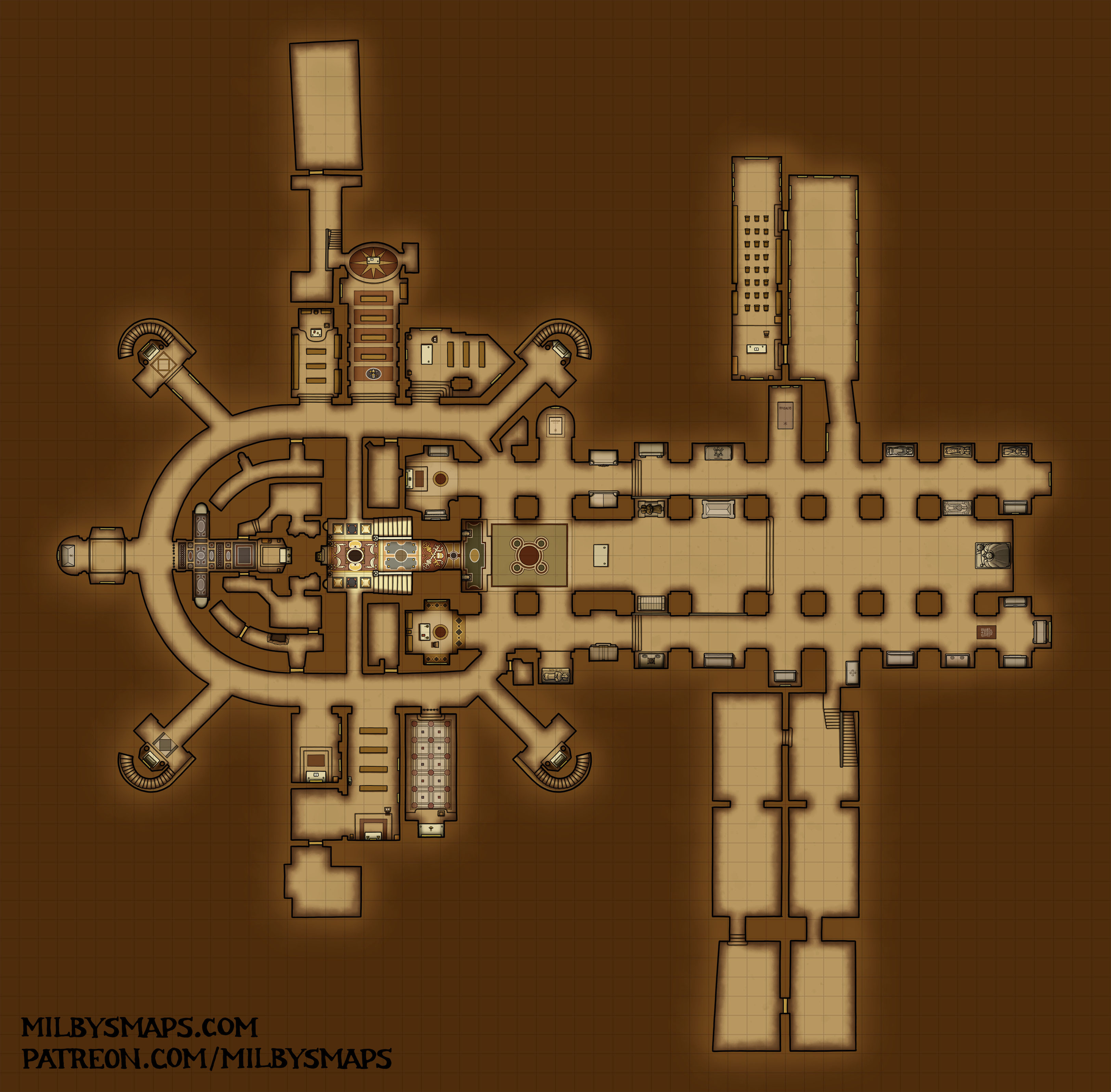
Below the grottoes, there’s one more level: the Necropolis. This is a group of ancient Roman tombs that were rediscovered in the 1940s. This will be the next part of the Vatican I’ll be drawing.

Before that, however, I’ll be drawing the next Cartographic Congress winner, an infernal fortress that guards the banks of the River Styx, with watchtowers overlooking the river and lots of rusty, bloody bulwarks, cages, etc. So, that’s certainly something to draw in between maps of the Vatican, haha. Well, I’m gonna get started on that. Let me know what you think of the grottoes!

Templemore Village

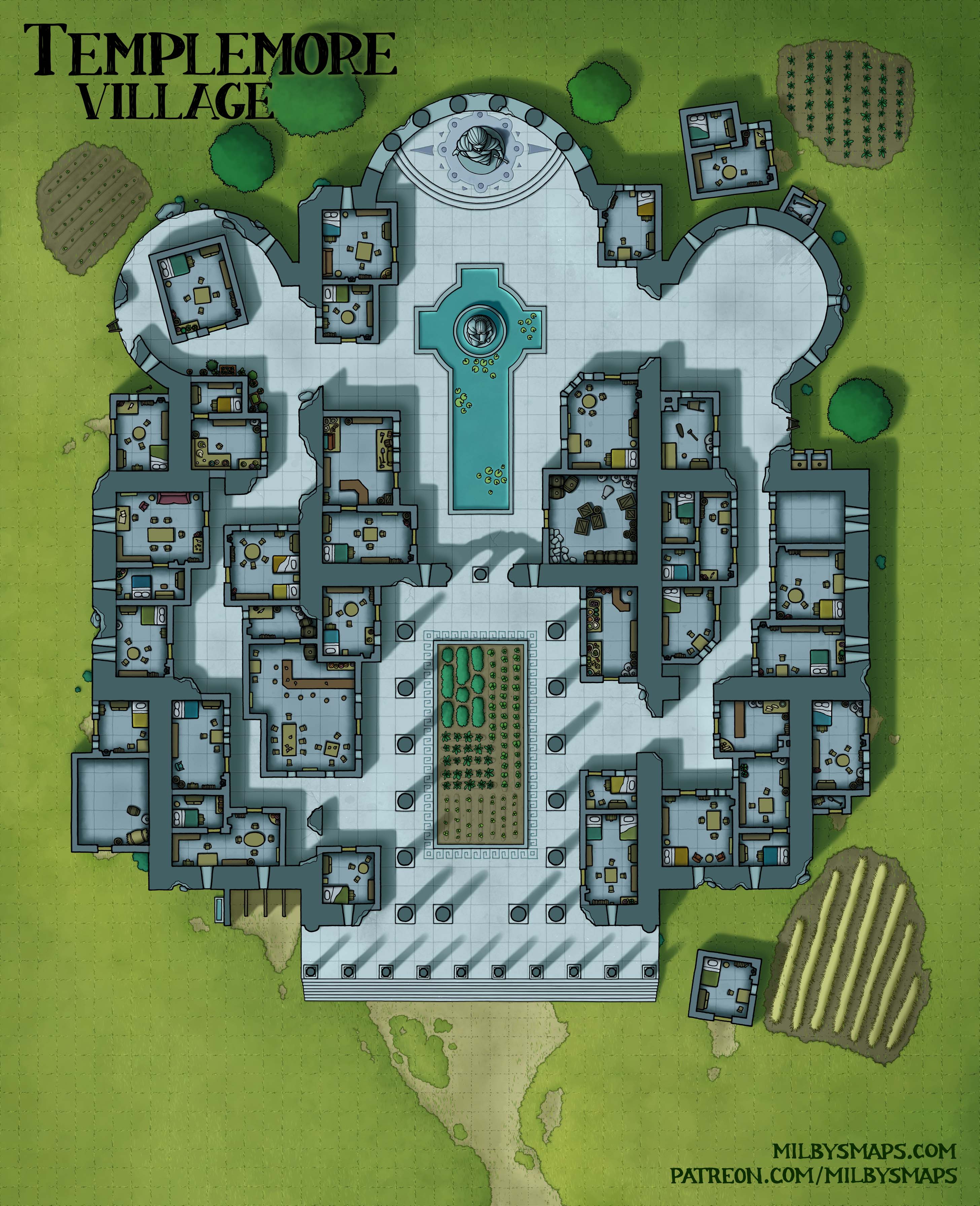
Here’s the finished village of Templemore, built on the ruins of a great, ancient temple. My story about the place is that the temple was dedicated to a long-forgotten goddess of luck. While the residents don’t worship her (or even know who she is), she bestows her blessing of good fortune upon them nonetheless. So if the players show up at the tavern and start gambling with the old fellas at the corner table, things are likely to go very poorly for them.

There are variations of that story that could be fun, too. If you change the goddess and the blessing, there are a lot of potentially interesting scenarios that could become the seed for an adventure. Like, what if it’s the goddess of time and she stops the residents from aging. Or what if it’s the goddess of death and everyone rises from the dead after they die. Or what if the goddess is angry that they’re here and curses them instead. There are a lot of ways you could go with it if you want to get creative.

Next up, I’ll be drawing the Vatican Grottoes underneath St. Peter’s Basilica. These are a series of tunnels, chapels and tombs, including the tomb of St. Peter himself. This won’t take nearly as long as the main floor of the Basilica itself, but, as you can see in this picture, they went pretty hard on both the floors and the statuary, so it’ll take a bit longer than it would have if the Vatican had hired a cheaper contractor. Also, I want to add that I love statues of animals by sculptors who’ve never seen that animal in real life and the lions in that picture are a great example.

Anyway, I think that’s about it. I hope you like the map. Let me know what you think!

Saintsblade Abbey

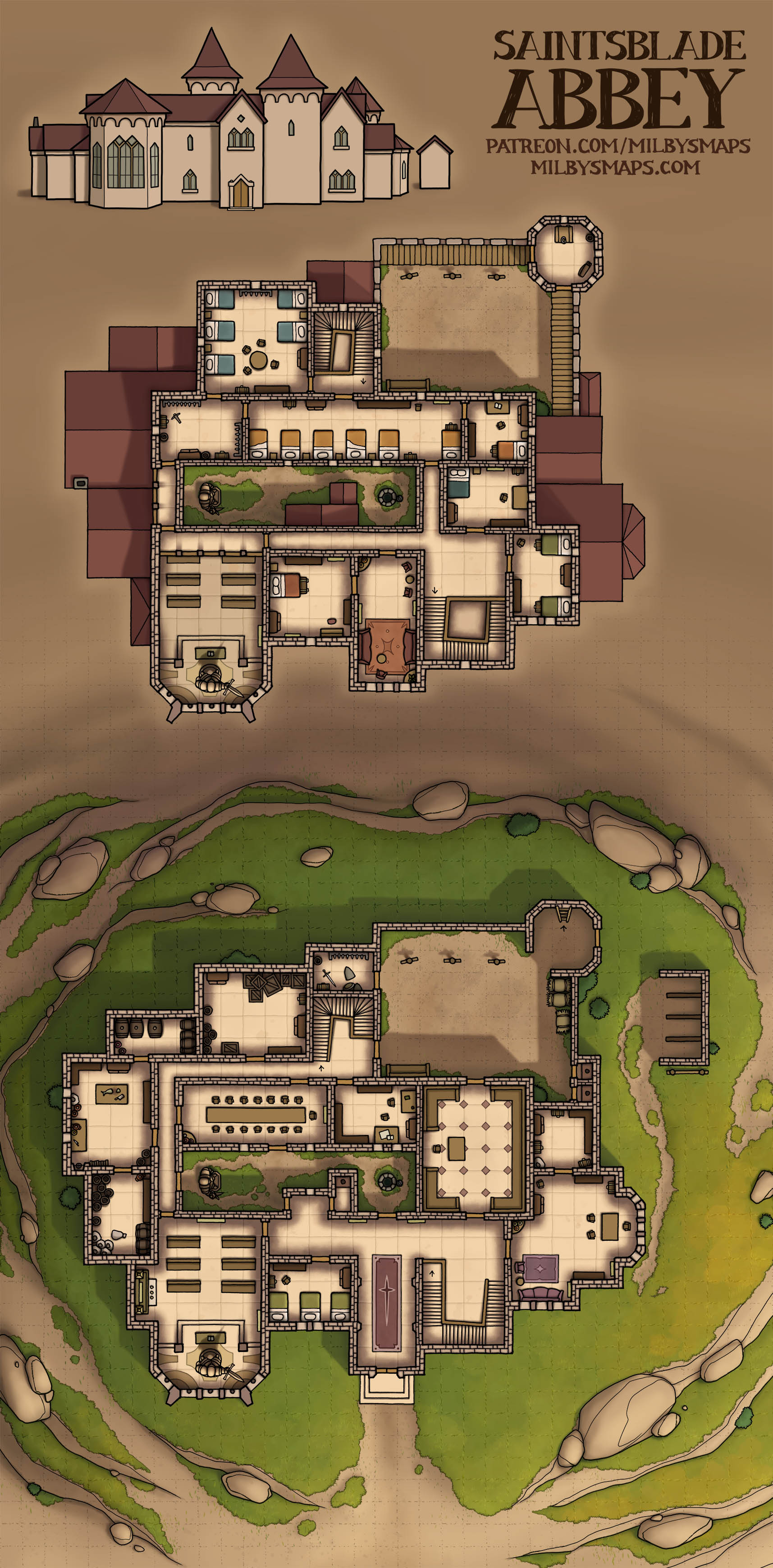
Saintsblade Abbey is the home of an order of paladins, devout followers of the God of Doing the Right Thing. Here, these holy warriors train rigorously in the ways of battle. Because, on occasion, Doing the Right Thing involves caving people’s skulls in with a hammer.

I think this map could be good for an adventure where the party’s paladin returns home to deal with some catastrophe that befell his order. Maybe there’s heresy in the ranks, or a conflict with a rival church, or a schism that threatens to tear the order apart. Or maybe they put that idiot Thaddeus in charge (god, can you imagine). Plenty of possibilities.

I still need to catch up on the Cartographic Congress before I get back to the Vatican, so next I’ll be drawing a floating, arcane city, similar to the Netherese Enclaves of the Forgotten Realms. This will be a city map rather than a battlemap, so it won’t be as big a project as it sounds, but I think it’s a cool concept and I’ve been looking forward to it. After that, it’s back to the Vatican.

Well, that’s it for now. Let me know what you think!

Mesa Roja

This map is largely based on the Cliff Palace at Mesa Verde, but I made enough changes that I didn’t want to call it Mesa Verde, since that sort of presents it as being an accurate representation. So instead of Green Mesa, I went with Red Mesa.

This place was built around 1200 AD and was only lived in for 100 years before it was abandoned. No one is sure why the people left, but the thing I’m curious about is why no one else moved in. I mean, if me and my friends lived in tents and we stumbled across a bunch of unoccupied stone houses, I’d definitely be moving in. It is a FREE TOWN. Who says no to that? Of course, I’m sure they had their reasons. Maybe the river dried up. Maybe the vibes were off. Or maybe the area had spotty internet. We’ll probably never know.

I need to catch up on drawing Cartographic Congress maps, so next I’ll be drawing a fortified abbey that’s the base of a Templar-style military order. It’ll be any paladin’s dream home, featuring a chapel, statues of stern-looking dudes holding swords, and private rooms for self-flagellation. It’s the perfect place to read the holy scriptures, practice your swordsmanship and feel an overwhelming sense of guilt for that impure thought you had four years ago.

All right, that’s about it. Let me know what you think!
Cladwater Lift Lock: The Ramparts

Here’s the upper level of Cladwater Lift Lock, as promised. And for patrons, I made a night version as well.

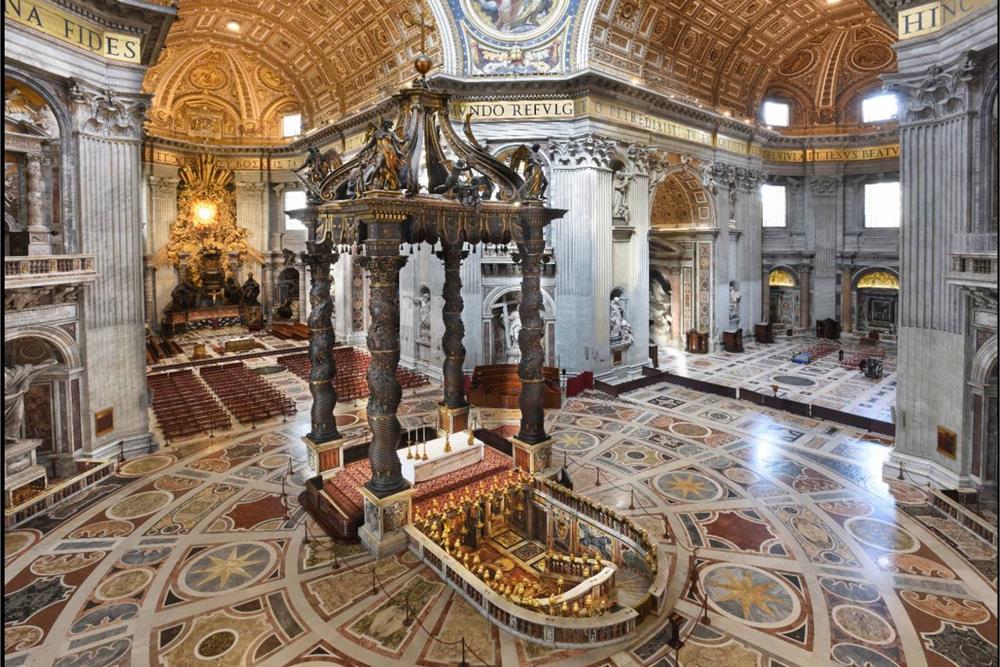
With that done, I’ll be getting back to the Vatican City megaproject, where I’ll be drawing St. Peter’s Basilica. Because the place is gargantuan and the floor is extremely elaborate, I’m not sure how long it’ll take, but I’ll post some work-in-progress pics along the way to show you how it’s going.

The basilica is an incredible work of art and I’m going to try to capture as much of that as I can in the map. But, ultimately, there’s only so much I can do. I’m going to show you two photos. Okay? This is Notre Dame in Paris. A world-famous masterpiece of architecture, no question. And this is St. Peter’s Basilica. I mean, like… that’s just bananas. My point is that I’ll do what I can, but I can only do so much in the face of that.

All right, I’m going in. Wish me luck.

Cladwater Lift Lock

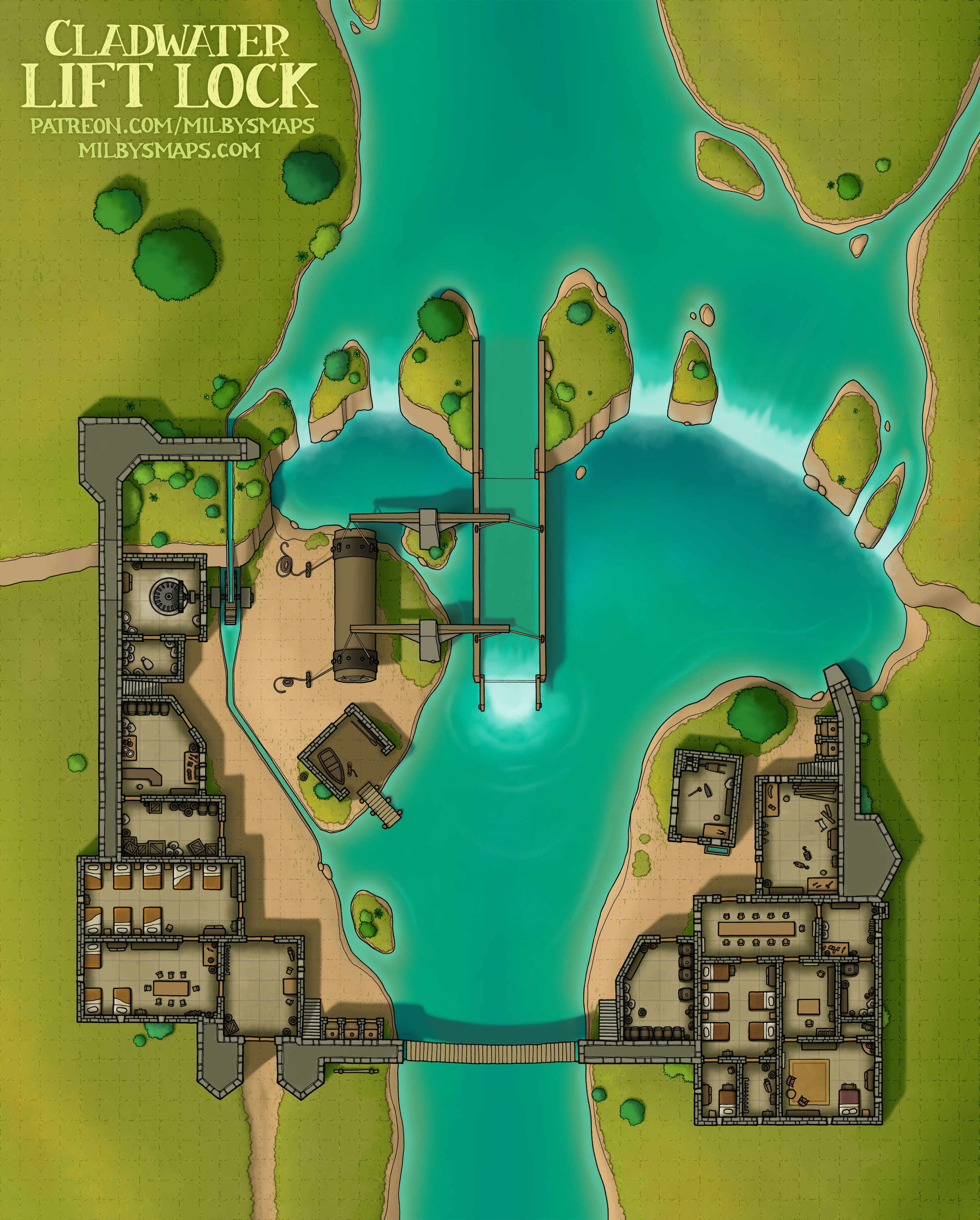
So the idea for this map is that it’s an outpost with a lock that lets riverboats cross a waterfall. If you’ve never seen one, boat elevators are a real thing. Here’s a Canadian one. And here’s Scotland’s super deluxe fancy one. I’m not sure if there are any that go over waterfalls, but it seems possible.

These things don’t go too far back in history, but Germany had one in 1789, so you should be able to get away with it in a fantasy setting. If you need an excuse, the phrase “dwarven engineering” has been letting DMs get away with putting sci-fi stuff in the middle ages for years. There’s a little pro tip for you.

As you may have noticed, this place does have stairs and there is an upper level to draw. It’s nothing fancy, just some ramparts, but I’ll draw that next. It should only take a day, two at most. After that, we’re back to Vatican City, where I’ll be getting started on St. Peter’s Basilica and its perfectly reasonable floor.

All right, I’ll be back with that soon! If you’ve got any questions or thoughts about the map, let me know.

Hackett’s Pass Blockhouse

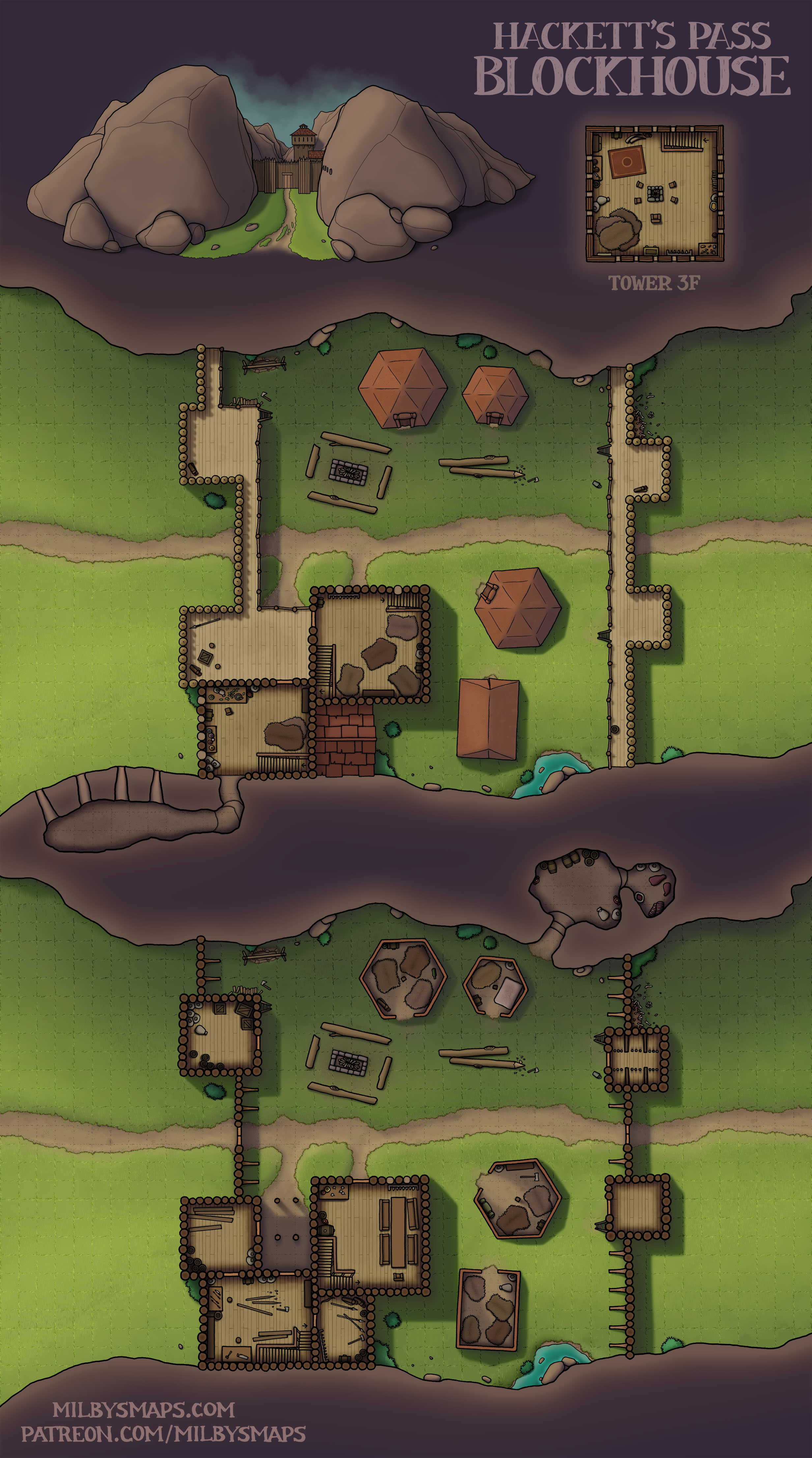
This map is a good place for an on-the-road encounter. It probably starts with the party traveling through the mountains and finding themselves in front of the gates here. Then, somebody tells them they need to pay a toll if they want to pass.

Now, in real life, people would see two options in this scenario: pay the toll or turn around and leave. But in D&D, nobody ever even considers the second option. The choices are to pay the toll or to kill every single one of these punks. And, unless the toll is very reasonable, I’d usually bet on option 2. Killing a few dozen people in order to avoid forking over a hundred bucks is just another day at the office in the Forgotten Realms. In any case, it’s a fun encounter to throw at your players in the middle of a long journey. And once in a while they do surprise you.

Next, I’ll be drawing a map of a multi-level waterfall city in the jungle that extends from the top of the falls, across multiple cliff outcrops and down to the bottom. This will be a city map (like this, for example), not a battlemap like Vayl’s Firth. I’m way outside my comfort zone with this– which I like– but it makes me a bit nervous going into it. So let me grab a pencil and see if I can figure out how to draw this place.

Well, that’s about it for now. If you’ve got any thoughts or questions, by all means let me know!

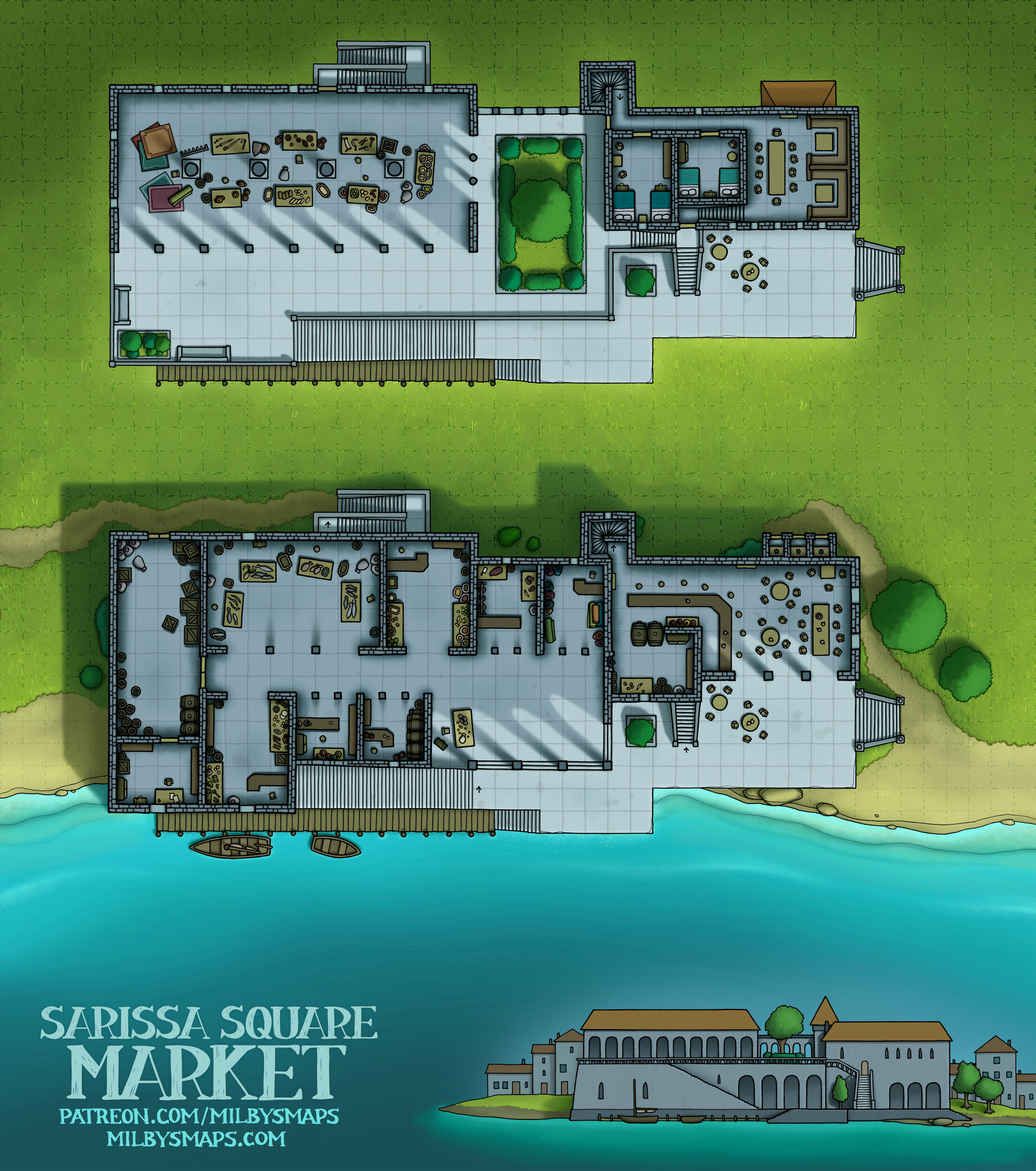
Sarissa Square Market

Sarissa Square is an arcade market with a variety of shops, vendor stalls and a tavern. It’s a place where your players can have a drink, get pickpocketed, browse a few shops and steal, like, 1gp worth of rope or something despite the fact that they drag a giant wagon full of cash around wherever they go.

Some of you may be asking, “Is this a mall?” Well, it isn’t not a mall. But it’s less of a mall than another map I drew and that one was based on a real design that was almost constructed in Venice in the 1500s. Also, there’s a place called the Chester Rows in Cheshire, England, which is pretty much just a shopping mall that dates back to the middle ages. So, look, if Middle Ages Italy and England can have malls, Waterdeep can have a mall. Or, excuse me, an “arcade market.”

By the way, this was inspired by Pike Place Market in Seattle. The part of it the map is based on is fairly new, so I had to medieval the hell out of it, but I think I got the basic design of the place in there. Also, they do have a bar in there, so the tavern is accurate.

Next up, I’ll be drawing an orcish fortress that walls off a mountain pass. I’ve actually been meaning to draw a fortress in a mountain pass for years now and I can’t believe I actually haven’t drawn one yet. That madness is about to end. After that, I’ve got one or two more maps to draw and then we can get started on the next megaproject: a complete map of the Vatican. Because screw it, let’s draw a whole country. Are you in? I hope so, because this is happening.