Brazenthrone – The Noble Quarter – Third Level


There will be one more floor to the Noble Quarter, which– I’m not going to lie– isn’t going to be super exciting unless your favorite part of these is the roofs. But it’ll only take a day or two and, afterwards, I’m finally going to put all of this together. All of Brazenthrone in one image. It’ll be way too big to serve any practical purpose, but I really want to see what that looks like.

What about after that? Well, I promised that once the core parts of Brazenthrone were done, we’d take on Mont-Saint-Michel. And we will.

Okay, here’s the non-annotated version. There are DM notes and a fully-annotated version of this map with all the rooms marked available to patrons.

The Silent Vaults – A Prison for the Magically Adept


When a person of great magical power breaks the rules, you can’t just throw them in the pokey with the cattle rustlers and meth dealers. Imprisoning someone with the ability to fly, teleport, and otherwise bend the rules of reality takes a place like the Silent Vaults.

Enclosed in an antimagic ward generated by a powerful device (in the dungeon, left side), the Vaults nullify the abilities of those contained within. The facility also has a guard barracks, warden’s residence and a chapel that is definitely not dedicated to Mystra.

Floating above the prison is a tiny island with a heavily-warded containment vault, designed to hold a person or entity of incredible arcane power. If you need to make a demon or an archlich sit and think about what they’ve done, this is the place to do it.

There’s an annotated version of this map and DM notes available to patrons.

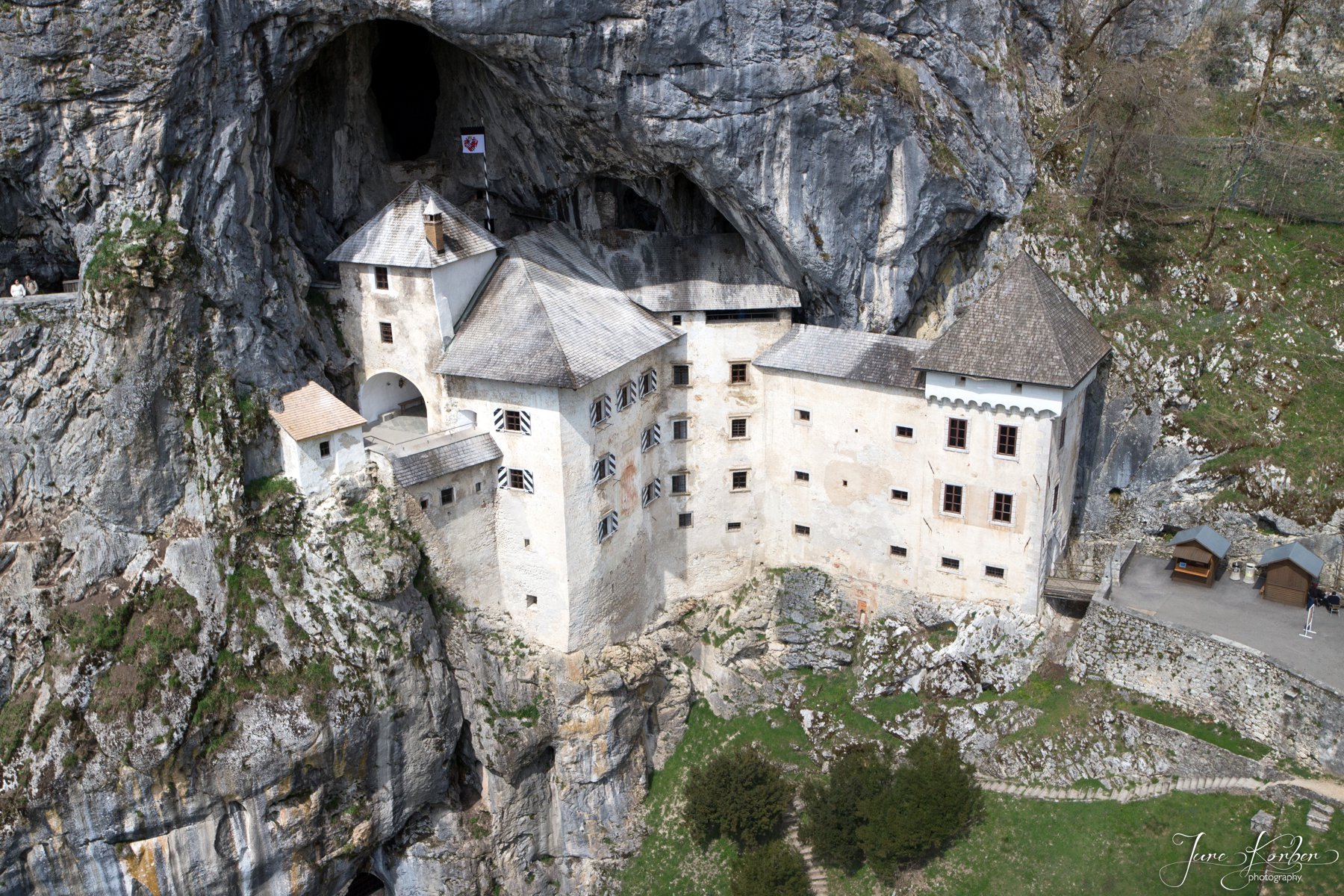
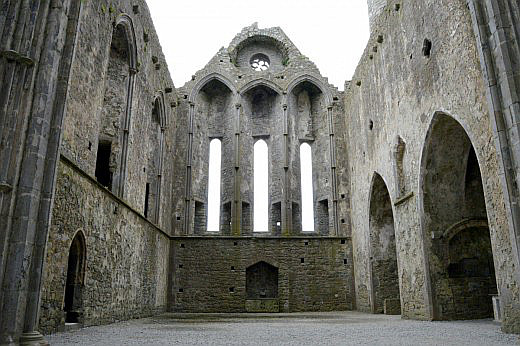
Saint’s Rock – A fortified cathedral inspired by Ireland’s Rock of Cashel


, the inspiration for Saint’s Rock. Before it was a cathedral, it was the castle of Brian Boru, High King of Ireland. Fun fact: Brian Boru is the reason there’s a harp on your Guinness can. He’s also the reason that there are pictures of harps all over everything in Ireland despite the fact that no one plays it or has any interest whatsoever in harps or harp music.

Anyway, Brian Boru’s great-grandson gave the castle to the church, who rebuilt it into a cathedral. While the castle was dismantled, the gates and curtain wall were left in place, which, combined with the Rock’s location on a steep hilltop, made it a very well-protected church.

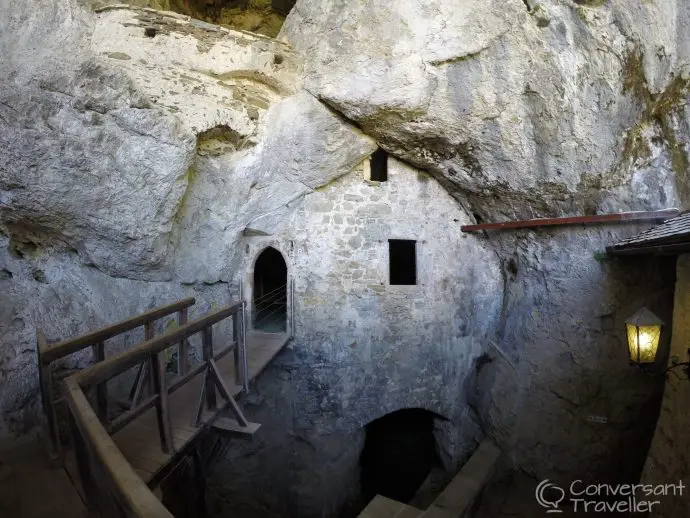
There are a few differences between Saint’s Rock and the Rock of Cashel, the biggest of which was the removal of a secondary chapel building and the addition of the cloisters. The passages through the walls are actually real. This photo shows what the second floor passages look like from the ground (you can see them at the bottom of the windows).

So, with this done, Brazenthrone‘s Noble Quarter is next. It’s the second-largest chamber of Brazenthrone and it’s going to take a minute. I’ll get you some work-in-progress photos along the way. Sound good? All right.

There’s an annotated version of this map and DM notes available to patrons.

Brazenthrone – The Anvil Quarter- Second Level


With the second level done, the Anvil Quarter is now finished and Brazenthrone looks a lot less like The Dwarven City of 10,000 Desk Jobs. As I mentioned in the last post, the next Brazenthrone map is the Noble Quarter, which completes the core of the city (although there’s still a lot more to do). After that, I’m going to do something I’ve been waiting to do for a while: I’m connecting all the chambers of Brazenthrone and putting everything into a single image. Of course, I’ll have to shrink it way down to keep the file size from being absurdly huge, but I think it’ll be cool to step back and get a look at the whole thing.

So, I went to Spain earlier this month. And I learned a few things:

1)”España” is not Spanish for “Hot France.” I have it on very good authority.

2)Spain doesn’t know anything about October. Seriously, it was like 35°C (95°F). I don’t think October has even been invented there yet.

3)The Torre Del Oro is definitely going to be a map. Not soon, since there’s plenty of Great Vote maps to take care of first, but one day.

4)The Alhambra is unbelievable. It’s a giant castle with several palaces, a church, homes, workshops, gardens and about a billion fountains. These guys were really into fountains. Like, there are literally fountains surrounded by other, smaller fountains. Will this ever become a map? I don’t know. This place is absolutely enormous and it would easily be the biggest thing I’ve ever done aside from Brazenthrone. For now, let’s file it under “we’ll talk.”

5)Seville is kind of unreal. I’ve been to Spain before (I live in Ireland and Ryanair will fly you there for some loose change and a stale slice of leftover pizza). But before, I was in Barcelona. Barcelona is a great city with some impressive stuff, but… how do I put this? You can go to Barcelona and not realize that Spain was once the center of a massive empire that was swimming in gold. That is not the case with Seville. Seville slaps you in the face with that fact over and over again. In fact, I’m pretty sure the Plaza de España was built for that specific purpose.

Okay, here’s the non-annotated version. And, of course, there’s patron stuff for patrons. You know the drill.
The Kothoa – The Dual Harbor of Carthage


The Carthaginian harbor is one of those things that has to have been imagined by a fantasy artist, except it wasn’t. It was real and this is, from what we know, what it looked like. On the left is the merchants’ harbor, built for trade, with a chain boom at the entrance that can be raised or lowered to block access. On the right, the war harbor, housing the mighty Carthaginian fleet. And in the center of the war harbor is the Admiralty Isle, a man-made island with more docking space, a naval shipyard and an observation room from which the fleet’s command can oversee everything.

The main departure from reality is the scale– the war harbor shown here has space for 34 ships, but the real harbor held around 220. Still, I think this gets the point across without the need for a map the size of a mattress.

Thanks to Anders, who proposed this idea to the Cartographic Congress. Some of my favorite CC maps are the ones where I started out thinking, “How the hell am I supposed to draw this?!” I definitely felt that way with this, but I’m really happy with how it turned out. Hopefully you like it too.

Next up is the second (and last) floor of Brazenthrone’s Anvil quarter. Then I’m going to do last month’s Cartographic Congress map, which will be inspired by the . Then I’m going to go straight into Brazenthrone’s Noble Quarter. I was thinking about trying to get one of the Great Vote maps done in between, but my thinking on that is this (and correct me if I’m mistaken): the Great Vote maps people are really champing at the bit for are the bigger ones, but I need to get the core of Brazenthrone (the Noble and Anvil Quarters) finished. Once I’ve got those two huge maps taken care of, I’ll be freed up to take on Mont-Saint-Michel, which, I suspect, is the map a lot of you are looking forward to the most. So, that’s the plan at the moment. We’re just gonna run past all the minions and rush down the big guys. Can I get a Leeroy Jenkins?

If you need it, here’s a version without the ships. There’s also an annotated version of this map and DM notes available to patrons.

Brazenthrone – The Anvil Quarter – Ground Level


The Anvil Quarter is Brazenthrone‘s center of industry. Here, dwarves can be found making things from steel, stone, gold, glass, ceramics and more.

One of the quarter’s more notable landmarks is the massive, communal Freehammer Forge, built to ensure that no dwarven smith is unable to practice his or her craft on account of being unable to afford a smithy of their own. Waterwheels power the Freehammer’s giant bellows, as well as two hammermills, a grinding mill and a rolling mill. The jewelers, smiths and engineers all have their guildhalls in the Anvil Quarter and the Royal Mint can be found here as well.

So, on Monday, I’m taking my first vacation since I started this. I’ll be going to Spain to attend a friend’s wedding on Monday and I’ll be gone for six days. That’s going to be pretty weird for me, since I’ve hardly even taken a day off in the last year and not drawing for six days seems like a totally alien concept right now. Luckily, my friends are getting married near the Alhambra and there is no version of reality in which I don’t take the chance to see that. It might end up becoming a map, who knows? I mean, not soon, but someday.

Next up is the harbor of Carthage, last month’s Cartographic Congress winner. I’m going to try to get it to you before I leave, but it’ll probably be pretty big, so I don’t want to make any promises.

And finally, this month’s Cartographic Congress has chosen Senator Williams’ proposal of a cathedral fortress. As it happens, I went to see a cathedral fortress several months ago and I was tossing around the idea of making a map inspired by it. Well, now it’s happening. If you’ve never heard of it, behold the .

Here’s the non-annotated version. There’s an expanded annotated version of this map and DM notes available to patrons.

Brazenthrone – The Grand Temple

Brazenthrone‘s Grand Temple is a religious complex dedicated to all the gods of the dwarven pantheon. I use Forgotten Realms deities for Brazenthrone, so the big golden gentleman in the middle would be Moradin the All-Father, surrounded by the other 13 gods of the Morndinsamman. The four larger statues are Berronar Truesilver, goddess of hearth and home (and wife of Moradin); Clangeddin Silverbeard, god of battle; Sharindlar, goddess of love and healing; and Dumathoin, god of mining and gems.

I said I’d be doing one of the larger maps chosen in the Great Vote next and I’ve decided on the small, but densely-populated merchants’ trade port island. In the vote, it was in the large category, but I’d say it’ll end up being what I’d normally class as a “huge” map (actually, I’d say it’ll be pretty massive). Also, as I said before, I’m looking to tackle Brazenthrone’s Anvil Quarter and Noble Quarter soon and one of those will probably come after that.

Here’s a version of this map without all the numbers and words on it. There’s DM notes, higher-res versions with even less words on them and VTT versions available to patrons, should you be interested.

The Assassins’ Monastery

If you like this map, but you’d prefer to hide the secret rooms from your players, here’s a version without them. That’s also the version for people who’d prefer this monastery to be occupied by honest, wholesome monks who actually spend their days thinking about god, growing herbs and killing as few people as possible. Also: boring. Just kidding, do your thing.

In case you missed the last post, this place was inspired by Rudkhan Castle in Iran, which was actually controlled by the historical assassins at one point. I think this place could be used for plenty of other things, though. Maybe they’re cultists. Or vampires. Or werewolves, or bandits, or… bandits who are also werewolves. You get the idea. Anyone who wants to hide in plain sight.

I said I was going to do a residential part of Brazenthrone next, but I changed my mind. I’m doing the Grand Temple instead. After that, I’m doing one of the bigger maps chosen in the Great Vote. Then, I’m not sure, but I can tell you this: I want to make a push to get Brazenthrone’s Anvil Quarter and Noble Quarter finished. That gets the core of the city done, along with entrances from the surface and the underdark, and puts the whole thing in a much more usable state. I think I can get those both finished within the next two months or so. All right, I’m going to get to work on that temple.

As always, there is patron stuff for patrons.

Brazenthrone – The Common Quarter – Third Level

Here’s the non-annotated version.

This is the final floor of Brazenthrone’s common quarter, capping off the local shopping center arcade market and the presumably-expensive apartments to the north. Speaking of which, I don’t add a compass to my maps, but if you ever want to know which direction a map is facing, there are always two possible answers. Choose the one that satisfies you the most:

  1. Whichever way is most convenient for you to use it in your setting.
  2. The top of the map is north.

Another thing I want to mention, which also applies to all my maps (aside from region maps): the scale is always 5 feet. I don’t always include a scale, but it’s the same for all of them. I’ve had people tell me they use certain maps at a 10′ scale (particularly Brazenthrone and Finbarr’s Marsh) because they like a little more room, which I can understand, especially if you have a big party and you need to fit 8 or 10 players into one place for a fight. But, since 5′ is pretty much the “standard” and because so many people have a strong preference for it, I won’t be drawing maps at any other scale.

Alright, next up is the Assassins’ Keep, chosen by last month’s Cartographic Congress. Then I’m thinking I’ll knock out one of the residential districts of Brazenthrone, which will give me time to take on one of the bigger maps chosen in the Great Vote.

There’s DM notes for this map, VTT versions and all the usual stuff available to patrons. The annotated version is the same.

The Great Library

The map above is 63×31 if you’re using a VTT.

The Great Library is a fantasy version of the Great Library of Alexandria. The historical Library of Alexandria is famous for being the largest repository of knowledge in the ancient world. Its construction, ordered by the Pharaoh Ptolemy II, was probably the greatest accomplishment anyone who slept with their sister has ever made.

In addition to its large collection of books, scrolls and maps, the Great Library features living facilities for resident scholars, a lecture hall, shrine, scriptorium and more. It truly is a great milestone in mankind’s eternal quest for knowledge. You should send your players to burn it to the ground.

There’s the usual patreon stuff for patrons. You know the deal.